
Plastic Waste Recycling Plant Setup in India: Complete Guide
Plastic waste has moved from a civic nuisance to a serious business opportunity. Every day, large volumes of PET bottles, polythene bags, HDPE containers and packaging film are collected from homes, shops and factories, and most of it needs proper processing before it can return to the market as raw material. For an entrepreneur willing to learn the process and follow the rules, a plastic recycling business can be a sound long-term venture. This guide explains how the model works, what shapes the investment, which approvals matter and how a setup typically unfolds for anyone entering the plastic recycle industry in India.
Why recycling is attracting investors
A plastic waste recycling business sits where policy and demand meet. India generates a large quantity of plastic waste every year, and a significant share still goes unrecovered. Policy is pushing in the other direction. The Plastic Waste Management Rules, 2016, as amended, place Extended Producer Responsibility at the centre of the framework, making producers, importers and brand owners answerable for the plastic packaging they put into the market. More recent amendments have added recycled-content requirements. Many obligated companies meet their targets by sourcing recycled material or buying certificates from registered processors, which gives recyclers a demand base tied to regulation, not only to market prices. A plastic recycle company in India competes for the same feedstock as a waste management company or an independent processor, which is why the recycling business in India has drawn interest from first-time entrepreneurs and established groups alike.
How a plastic waste recycling plant works
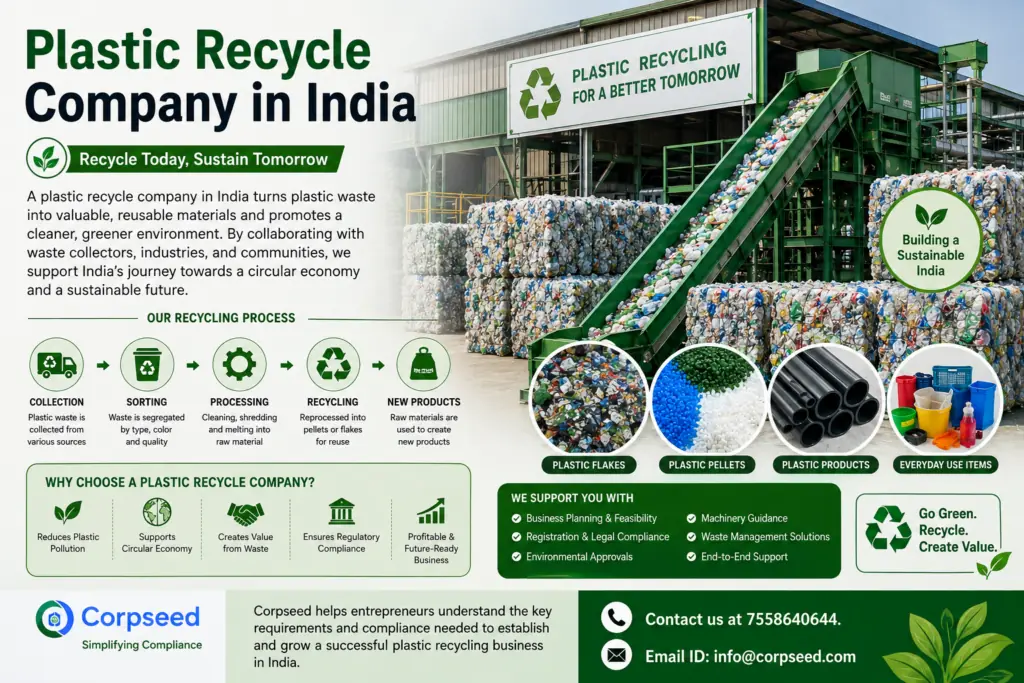
Whether you run a polythene recycling business or a multi-polymer operation, the process follows a similar path. A plastic recycle plant begins by sorting incoming scrap by polymer type and colour, because PET, HDPE, LDPE and PP behave differently and sell at different prices. Sorting is where a plastic scrap business earns much of its margin. Labels, caps, soil and other contaminants are removed, and the clean material is shredded into flakes, washed to strip residue and dried. For many buyers, the flakes are melted and extruded into pellets, which are easier to store, transport and process in moulding or packaging units. Many entrepreneurs start with a focused polythene recycling plant that handles one stream, then add lines as volumes and buyer relationships grow. Some plants go a step further and make finished products, such as plastic bottle recycled pots and planters.
Approvals and regulations to plan for
Legal planning should come before you buy land or machinery. Plastic processors are generally expected to register on the Central Pollution Control Board’s EPR portal, and most plastic recycling units also need a consent to establish and a consent to operate from the State Pollution Control Board. Standard business requirements, including a trade licence, GST registration, factory licence and fire safety clearance, apply alongside these. Local zoning and municipal rules can narrow your choice of site, so check them early. Official guidance is available from the Central Pollution Control Board. Because the Plastic Waste Management Rules have been amended several times, most recently in 2026, confirm current conditions with the CPCB and your state board before committing funds to a project.
What drives plastic recycling plant cost
The plastic recycling plant cost in India depends on the project rather than on a single published figure. The main drivers are processing capacity, usually measured in tonnes per day, the type and automation level of machinery, and whether you buy or lease land and build a shed. Washing, drying, shredding and pelletising equipment usually account for a large share of spending. Power connection, water arrangements and effluent treatment add to the budget, and working capital for raw material purchases is often underestimated. The most reliable estimate comes from a detailed project report that matches capacity, location and product mix.
Steps to set up a plastic recycling factory
Setup works best when it follows a planned order. Start by deciding what you will process and who will buy your output, because those two choices shape everything that follows. Next, select a site with dependable power, road access and room to store incoming bales and finished goods. Then prepare a project report, apply for approvals and arrange finance. Once machinery is installed, run trial batches and check output quality against buyer specifications. The final stage is building a supply chain of collection agents, scrap dealers, municipal contracts and offtake agreements. Many first-time founders underestimate this step, yet steady feedstock and steady buyers decide whether a plastic recycling factory runs profitably over time.
How Corpseed can help
Corpseed works with entrepreneurs who want to launch a plastic recycling plant in India or add a processing unit to an existing operation. Support covers project scope, site and equipment planning, compliance steps and implementation, so founders can decide with clear information rather than guesswork. Whether you are exploring waste management companies in India as a new venture or planning a single-stream unit, an early conversation can prevent costly rework later.
Also read our guide to e-waste recycling plant setup.
Ready to discuss your project? Contact us at 7558640644 or email [email protected]. Full service details are available at https://www.corpseed.com/service/plastic-waste-recycling-plant-setup.
Frequently asked questions
Is a plastic recycling business profitable in India?
Profitability depends on feedstock supply, sorting quality, machine utilisation and buyer demand. Units that secure steady raw material and deliver consistent output tend to perform best, while plants running well below capacity struggle to cover fixed costs. A project report should test these assumptions before any investment is made.
Which plastics can be recycled?
Common streams include PET bottles, HDPE containers, LDPE films and PP packaging. Multilayer packaging and heavily contaminated plastic are harder to process economically and often need separate handling.
Do I need approvals before starting a plastic recycling unit?
Yes. Plan for EPR registration, consent from the State Pollution Control Board and standard business and factory licences. The exact requirements depend on capacity and location, so confirm them with the relevant authorities before buying equipment.
How long does the setup take?
Timelines vary with site acquisition, approvals, machinery delivery and construction. Starting the approval process early is one of the most effective ways to avoid delays.
Can a small entrepreneur start a plastic recycling plant?
Yes. Many units begin small with a single polymer stream and expand as feedstock sources and buyer relationships grow.