
ABA Therapy vs. Traditional Discipline: Why Positive Behavior Support Works Better
Every parent wants their child to develop good habits, follow instructions, communicate effectively, and understand how to behave in different situations. However, when autistic children or children with developmental delays struggle with challenging behaviors, finding the right way to respond can be difficult. Some parents rely on traditional discipline methods, such as giving warnings, taking away privileges, or using punishments. While these approaches may sometimes stop unwanted behavior temporarily, they do not always teach children what to do differently.
This is where positive behavior support offers a different approach. Through Applied Behavior Analysis (ABA) therapy, children can learn appropriate behaviors, develop important life skills, and build confidence in their everyday interactions.
Instead of focusing only on correcting mistakes, positive behavior support looks at why a behavior happens and how parents and therapists can help children develop better communication skills and appropriate ways to express their needs.
Understanding Traditional Discipline
Traditional discipline generally focuses on correcting unwanted behavior through rules, warnings, and consequences. For example, if a child refuses to follow instructions, a parent might take away a favorite toy or stop them from watching television.
These methods are often used with the intention of teaching children right from wrong. However, problems can arise when discipline focuses mainly on stopping unwanted behavior without teaching an alternative.
What Is Positive Behavior Support in ABA Therapy?
Positive behavior support is an approach that focuses on understanding a child’s behavior and teaching useful alternatives. It is commonly incorporated into ABA therapy to help children develop skills that improve their daily lives.
For instance, a child might cry whenever it is time to leave the playground. Instead of viewing this as simple disobedience, an ABA therapist considers possible reasons, such as difficulty with transitions or communicating their feelings. The therapist can then introduce strategies to help the child handle the situation more appropriately.
5 Reasons Positive Behavior Support Is More Effective
1. It Addresses the Reason Behind Challenging Behaviors
One of the biggest differences between traditional discipline and positive behavior support is the way each approach responds to challenging behavior.
An ABA therapist observes what happens before and after a behavior to understand possible triggers. For example, a child who frequently leaves their seat during classroom activities may be struggling with the task or need a movement break.
Understanding the reason behind a behavior makes it easier to choose a strategy that addresses the actual problem.
2. It Encourages Positive Behaviors Through Reinforcement
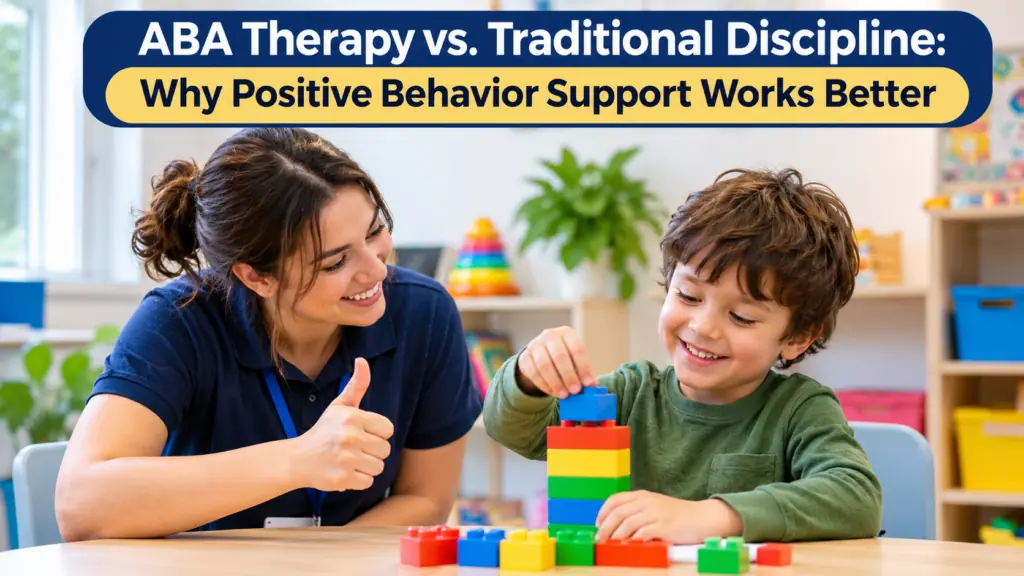
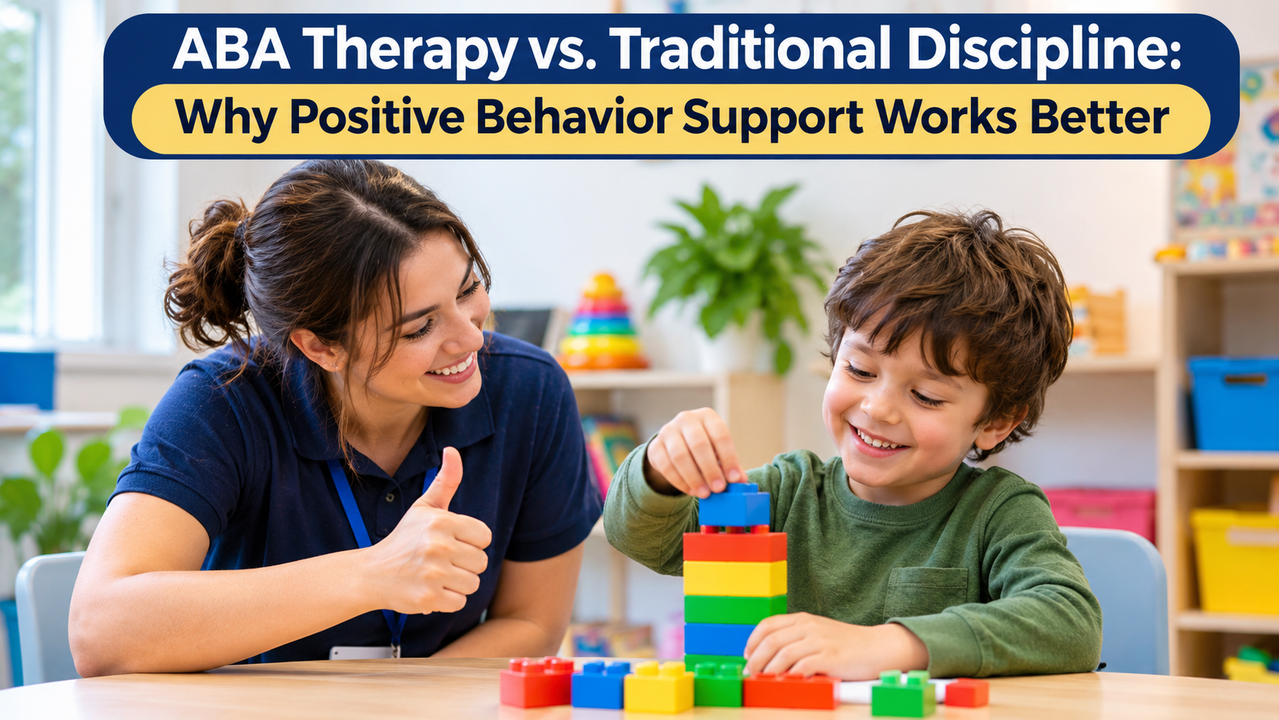
Children need to know when they are doing something correctly. Positive reinforcement helps them understand which behaviors are appropriate and encourages them to repeat those actions.
For example, when a child successfully asks for a toy instead of grabbing it from another child, the therapist might offer specific praise or a meaningful reward.
The important part is recognizing the behavior and helping the child understand what they did well.
3. It Builds Communication and Emotional Regulation Skills
Some challenging behaviors occur because children do not yet have the communication skills needed to express their feelings or needs.
An ABA therapist can help children learn to:
- Ask for help when something feels difficult.
- Express their needs using words, gestures, or communication devices.
- Identify basic emotions such as happiness, sadness, and frustration.
- Request a break when feeling overwhelmed.
These skills can make a meaningful difference at home, in school, and during social activities.
4. It Develops Independence Rather Than Dependence on Punishment
An important goal of child development is helping children learn to manage everyday responsibilities without constant reminders or supervision.
Positive behavior support teaches children the skills needed to complete tasks independently. For example, a child who struggles with getting ready for school might initially need visual reminders and step-by-step instructions.
With consistent practice, the child can gradually learn to follow morning routines, pack their school bag, and complete basic hygiene tasks independently.
5. It Creates a More Supportive Parent-Child Relationship
The way adults respond to children’s behavior can influence how children feel about themselves and the people around them.
Positive behavior support encourages parents and caregivers to recognize progress, provide clear guidance, and respond consistently. Instead of repeatedly saying, “Stop making a mess,” a parent can encourage a more specific action by saying, “Let’s put the blocks back in the box.”
This gives the child a clear instruction and an opportunity to succeed.
Positive Behavior Support vs. Traditional Discipline: What’s the Difference?
|
Traditional Discipline |
Positive Behavior Support |
|
Focuses on correcting unwanted behavior. |
Focuses on understanding and improving behavior. |
|
May rely on warnings and punishments. |
Uses positive reinforcement and skill development. |
|
May stop a behavior temporarily. |
Teaches alternative behaviors. |
|
Reacts after a problem occurs. |
Identifies triggers and plans appropriate support. |
|
Often emphasizes obedience. |
Encourages communication and independence. |
Discipline itself is not necessarily negative. Children need boundaries, clear expectations, and consistent guidance. Positive behavior support means responding in ways that help children understand expectations and develop the skills to meet them.
How Parents Can Use Positive Behavior Support at Home
Parents play an important role in helping children maintain the skills they learn during ABA therapy. Here are a few practical ways to introduce positive behavior support at home.
Recognize small achievements: Notice when your child follows instructions, communicates appropriately, or completes a task independently.
Keep instructions simple: Break complicated tasks into smaller steps and give instructions clearly.
Maintain predictable routines: Consistent routines help children understand what to expect throughout the day.
Offer appropriate choices: Giving children simple choices can encourage independence and cooperation.
Stay consistent: Children benefit when parents, caregivers, and therapists use similar strategies.
The Role of an ABA Therapy Clinic in Positive Behavior Support
An experienced ABA therapy team can provide structured guidance and individualized support. Therapists work with children to develop communication, social interaction, emotional regulation, and independent living skills.
Progress is monitored over time, allowing therapists to identify which strategies are helping and where adjustments may be necessary. Parent involvement is equally important because practicing these skills at home helps children apply what they learn beyond the clinic.
For families in Cottonwood Heights, finding an ABA therapy clinic, like Little Champs ABA, that values individualized care, family involvement, and positive behavior support can be an important step toward helping their child develop meaningful life skills.
Every child learns differently, and challenging behaviors should not automatically be treated as deliberate disobedience. Sometimes, children need help communicating their feelings, understanding expectations, or developing new skills.
Traditional discipline can establish boundaries, but relying only on punishment does not necessarily teach children how to handle difficult situations in the future.
Positive behavior support offers a more constructive approach by focusing on understanding behavior, encouraging progress, and teaching practical alternatives. Through individualized ABA therapy and active parent involvement, children can gradually develop the skills they need to become more independent and confident.