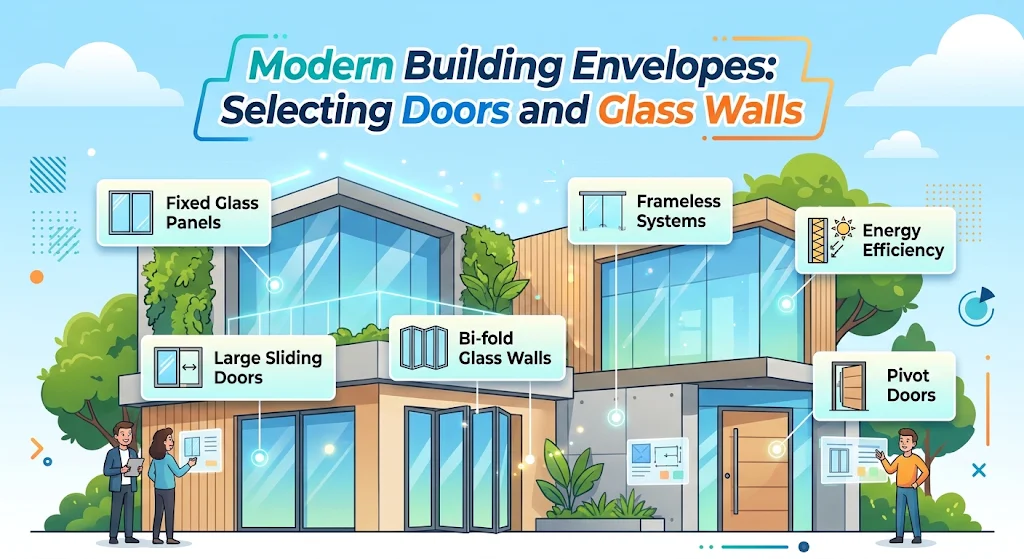

A subtle shift in building design has transformed how residential and commercial spaces interact with their surroundings. Structural envelopes no longer simply block exterior elements; they actively manage thermal efficiency, natural lighting, and interior comfort.
Selecting high-performance building materials requires balancing structural integrity, weather resistance, and long-term operating performance. Exterior door assemblies and architectural glass components play a critical role in preserving structural thermal seals while defining architectural character.
Elevating First Impressions and Thermal Integrity
Building entry points bear the combined responsibility of physical security, aesthetic appeal, and weather isolation. Choosing structural components built for climate resilience prevents premature envelope degradation and high utility expenses.
Structural Performance of Exterior Door Systems
Modern exterior entry assemblies rely on multi-material construction to achieve superior structural strength and insulation. Solid wood offers traditional architectural warmth but requires periodic sealing to prevent moisture absorption. Modern fiberglass and reinforced steel composites provide rot resistance and internal polyurethane foam cores that reduce conductive heat transfer.
Key selection factors for high-traffic entry systems include:
- Multi-point locking hardware that secures the door slab into the frame across multiple contact points.
- Heavy-duty weather stripping designed to maintain compression under severe wind-driven rain.
- Thermally broken thresholds that stop exterior temperatures from transferring across the floor sill.
Transitioning Between Indoor and Outdoor Spaces
Patio access points must endure continuous opening cycles while maintaining tight seals against moisture intrusion. Homeowners and commercial builders frequently evaluate sliding panels, hinged French assemblies, and multi-slide configurations based on available opening widths and climate severity.
Integrating energy-efficient entry and patio doors protects structural headers from moisture accumulation while providing reliable daily operation. Solid construction prevents frame warping caused by dramatic seasonal temperature shifts.
Expanding Living Spaces with Architectural Glass
Architectural trends increasingly favor expansive transparent openings that maximize daylight and blur boundaries between interior rooms and outdoor living areas.
Engineering Large-Format Openings
Large architectural glass installations require precise structural support and thermal engineering. Modern glass wall systems utilize heavy-duty aluminum or composite structural framing engineered to handle wind-load stresses without deflecting.
Options for expansive glass installations include:
- Folding Panel Systems: Accordion-style panels that stack neatly against adjacent walls to create wide, open passageways.
- Multi-Slide Pocket Systems: Large glass panels that slide smoothly along hidden track systems and tuck directly into wall pockets.
- Bi-Folding and Stacking Glass Walls: Specialized tracks that accommodate oversized insulated glass panels for uninterrupted views.
Thermal Performance in High-Visibility Assemblies
Large expanses of glass can introduce high solar heat gain if not specified correctly. High-performance glass packages utilize multi-pane configurations filled with inert argon or krypton gas to reduce conductive heat movement. Low-emissivity (Low-E) coatings reflect solar heat outward during warm weather and retain indoor heating during winter months.
Partnering with dependable materials distributors like Lifetime Building Supply helps project managers select certified door assemblies and structural glass packages that meet local building codes and strict energy standards.
Key Considerations for Material Durability
Selecting structural products requires analyzing material longevity under local environmental conditions.
Frame Materials and Environmental Exposure
- Fiberglass Composites: Highly stable across extreme temperature ranges. Fiberglass frames expand and contract at nearly the same rate as insulated glass units, preserving perimeter seals.
- Extruded Aluminum: Offers exceptional structural strength for oversized architectural panels. Quality aluminum systems incorporate internal thermal breaks to prevent heat loss through the frame.
- Vinyl Profiles: Low-maintenance and budget-friendly. Vinyl multi-chambered internal designs trap air to enhance insulating performance in moderate climates.
Water Infiltration and Drainage Protocols
Improperly sealed openings account for a significant portion of moisture damage in modern building envelopes. Structural design must include sloped sill pans, self-adhered flashing membranes, and weeping channels that direct wind-driven rain away from subfloors and internal framing.
Ensuring Long-Term Envelope Performance
Investing in quality architectural components delivers lasting structural value when paired with correct installation practices:
- Verify structural rough openings are plumb, level, and square before mounting frames.
- Apply continuous perimeter seals using non-expanding insulation foam around frame jambs.
- Conduct annual inspections of exterior caulking beads and weather-stripping seals.
- Keep threshold tracking tracks free of dust and debris to preserve smooth rolling operation.
Frequently Asked Questions
Question 1: What is the average lifespan of modern fiberglass exterior doors?
High-quality fiberglass doors typically last 20 to 30 years with minimal maintenance, resisting rot, rust, and denting.
Question 2: Are large glass wall systems energy efficient?
Yes, when built with multi-pane insulated glass, Low-E coatings, and thermally broken frames, glass walls maintain high energy efficiency.
Question 3: What is a thermally broken frame?
A thermally broken frame features an insulating barrier separating the inner and outer metal components to block conductive heat transfer.
Question 4: How do multi-point locks improve door performance?
Multi-point locks secure the door panel at multiple frame locations, improving structural security and creating a tighter weather seal.
Question 5: Can large multi-slide doors withstand heavy wind and rain?
Yes, engineered structural glass panels feature specialized sill drainage and weather stripping designed to meet strict wind-load and water-resistance standards.