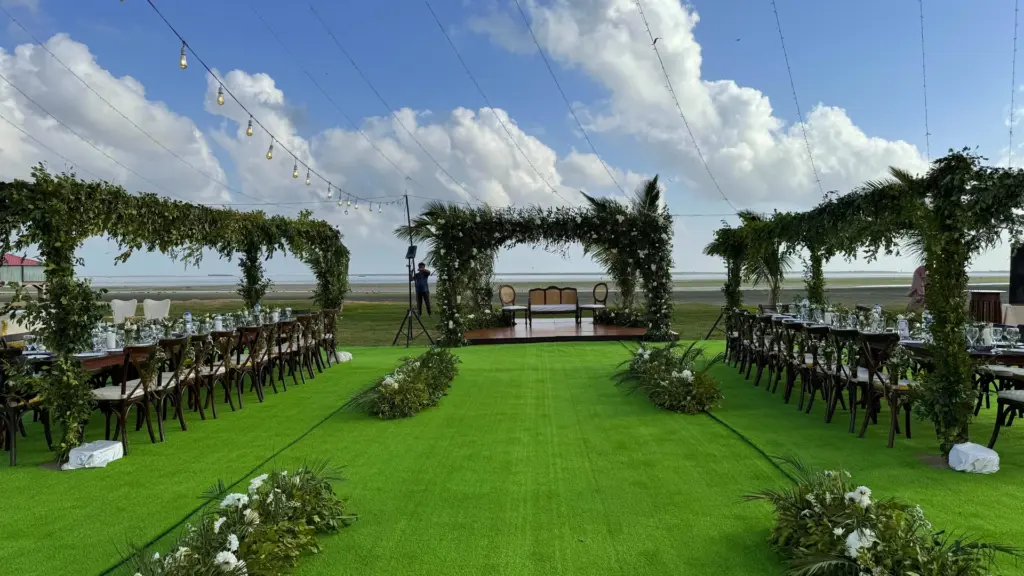

Planning a wedding involves hundreds of decisions, but choosing the right venue is one of the most important. The location influences the wedding atmosphere, guest experience, decoration possibilities, catering arrangements, photography, and overall event budget.
In Pakistan, wedding celebrations often include multiple functions such as Mehndi, Nikkah, Baraat, and Walima. Each function may require a different venue layout, guest capacity, decoration concept, and hospitality arrangement. Some couples prefer elegant banquet halls, while others choose open-air lawns, farmhouses, hotels, or private event spaces.
However, selecting a wedding venue should not depend entirely on photographs or recommendations. A beautiful location may have limited parking, unsuitable facilities, restricted decoration permissions, or additional charges that significantly increase the final cost.
A well-planned venue selection process considers the practical requirements alongside the visual appeal. Couples should evaluate the location, capacity, accessibility, seasonal conditions, facilities, booking terms, and available event services before making a commitment.
This guide explains 15 important factors to consider before booking a wedding venue in Pakistan and how to make a decision that supports the entire celebration.
- Define Your Wedding Requirements Before Searching for Venues
Before contacting venue owners or visiting different locations, establish what you actually need.
Start by identifying the type of wedding function you are organizing. A small Nikkah ceremony may require a different environment from a large Baraat or Walima reception.
Prepare a basic requirement list covering:
- Wedding function and event format.
- Preferred wedding date.
- Estimated guest count.
- Approximate venue budget.
- Preferred city and neighborhood.
- Indoor or outdoor setting.
- Decoration and stage requirements.
- Catering preferences.
- Parking and accessibility.
- Additional hospitality requirements.
Having these details ready makes it easier to compare venues and request accurate quotations.
It also helps prevent spending time visiting locations that do not match your event requirements.
-
Understand the Differences Between Outdoor and Banquet Wedding Venues
One of the first decisions couples face is whether to organize their wedding in an outdoor location or an indoor banquet hall.
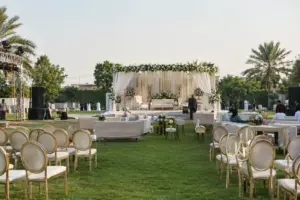
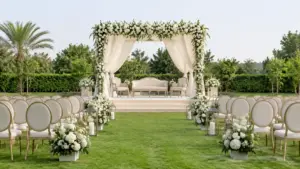
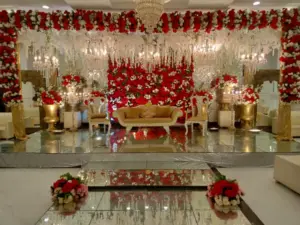
Outdoor venues may provide open spaces, natural surroundings, flexible layouts, and opportunities for creative decoration. Banquet halls generally offer controlled environments, established facilities, and more predictable arrangements.
Both options can work well, depending on the event date, guest requirements, location, and available budget.
Before making your decision, explore this Outdoor vs. Banquet Wedding Planning Guide, which explains the practical differences between these two wedding venue options, including weather, costs, guest comfort, decoration, and event logistics.
Consider the following questions:
- Will the wedding take place during summer or winter?
- Does the venue have a reliable weather backup?
- Is the location suitable for elderly guests?
- Are lighting and power facilities available?
- Does the venue allow customized decoration?
- Are catering and other vendors permitted?
Evaluating these details helps couples select a venue that supports both their preferred wedding style and practical requirements.
- Calculate the Actual Guest Capacity
Guest capacity should be evaluated carefully before booking.
A venue may advertise that it accommodates a large number of guests, but its practical capacity depends on seating arrangements, dining tables, stage dimensions, walkways, and other installations.
For example, a layout designed for standing guests may not be suitable for a wedding with seated dining and multiple food counters.
Ask the venue management for:
- Maximum seated dining capacity.
- Stage and photography space.
- Dining and buffet arrangements.
- Family seating requirements.
- Guest entry and exit access.
- Space for elderly guests.
- Emergency access routes.
If possible, request a proposed floor plan showing how the venue will accommodate your expected guest count.
Avoid selecting a venue that only works when every available space is filled.
- Evaluate the Venue Location and Accessibility
Location can influence how easily guests reach the wedding and how smoothly the event operates.
In major Pakistani cities, traffic, parking, road access, and neighborhood restrictions should be considered before finalizing a venue.
When evaluating accessibility, check:
- Distance from major roads.
- Availability of public transportation.
- Traffic conditions during event hours.
- Parking capacity.
- Valet arrangements.
- Entry and exit routes.
- Accessibility for elderly and disabled guests.
- Availability of nearby accommodation when required.
A centrally located venue may offer convenience, but its parking capacity and road access still need to be assessed.
For weddings involving guests from different cities, hotel accommodation and transportation arrangements may also influence the decision.
- Check Seasonal Conditions and Weather Risks
Weather can affect the suitability of a wedding venue, particularly when planning outdoor celebrations.
In Karachi, summer heat, humidity, and monsoon rainfall may create additional requirements for open-air events. Lahore and Islamabad also experience seasonal temperature changes that should be considered when selecting wedding dates.
Before booking an outdoor venue, confirm:
- Availability of covered areas.
- Rain protection.
- Cooling and heating facilities.
- Waterproof flooring.
- Backup power.
- Protection for sound and lighting equipment.
- Alternative arrangements if weather conditions change.
For indoor venues, check air conditioning, ventilation, generator capacity, and the overall comfort of the hall.
The goal is to ensure that the venue remains suitable even if conditions are different from what you initially expected.
- Compare Complete Wedding Venue Costs
One common mistake is comparing venues only by their advertised rental prices.
The actual cost may include several additional services and charges.
A detailed venue budget should consider:
|
Expense |
What to verify |
|
Venue rental |
Booking fee, taxes and timing |
|
Decoration |
Stage, flowers and entrance |
|
Catering |
Menu, guest count and service |
|
Lighting |
Decorative and functional lighting |
|
Sound |
Speakers, microphones and technical support |
|
Power |
Generator and fuel charges |
|
Parking |
Valet and security |
|
Facilities |
Bridal room and washrooms |
|
Logistics |
Setup and breakdown charges |
|
Additional services |
Cleaning, overtime and other fees |
Ask for a written quotation that separates included services from additional expenses.
Compare the final estimated cost rather than choosing the venue with the lowest initial price.
- Review Decoration and Customization Permissions
Decoration can transform an ordinary venue into a visually distinctive wedding environment.
However, not every location permits the same type of installation.
Some banquet halls have fixed stage structures, ceiling restrictions, and approved decoration vendors. Outdoor venues may provide greater design flexibility but require additional infrastructure.
Before booking, discuss:
- Custom stage fabrication.
- Floral installations.
- Entrance structures.
- Ceiling decorations.
- Lighting installations.
- Seating arrangements.
- LED screens.
- Hanging structures.
- Installation and dismantling schedules.
Ask whether the venue allows external decorators and whether additional permissions or security deposits are required.
A clear understanding of decoration policies prevents problems during the production stage.
- Inspect Catering Facilities and Food Policies
Food arrangements are a major part of wedding celebrations in Pakistan.
Some venues provide their own catering services, while others allow external catering companies.
Before selecting a location, confirm:
- Whether outside catering is permitted.
- Whether kitchen facilities are available.
- Food preparation and storage arrangements.
- Buffet or table-service options.
- Dining area capacity.
- Serving staff requirements.
- Food safety and hygiene procedures.
- Additional catering charges.
Request a sample menu or tasting session where available.
If the wedding involves several functions, consider whether the venue can accommodate different menu formats and service arrangements.
- Examine Lighting, Sound, and Technical Facilities
Technical arrangements contribute to the appearance and functionality of a wedding.
A venue may look attractive during the day but require significant additional equipment for an evening celebration.
Review the availability of:
- Stage lighting.
- Decorative ambient lighting.
- Sound systems.
- Wireless microphones.
- LED screens.
- Presentation equipment.
- Backup power.
- Technical control areas.
- Cable management facilities.
Ask the venue whether it provides technical equipment or permits external production teams.
The lighting and sound requirements should be discussed before confirming the stage design and event layout.
- Check Parking, Security, and Guest Facilities
Guest facilities are often overlooked when couples focus primarily on decoration.
However, parking, washrooms, security, and accessibility influence the overall wedding experience.
Evaluate the following:
Parking: Confirm whether the venue has enough parking for the expected number of vehicles.
Security: Discuss entry management, security personnel, and guest movement.
Washrooms: Check the number, cleanliness, and accessibility of facilities.
Bridal Room: Ask whether a private preparation room is available.
Elderly Guest Access: Check ramps, walking distances, and seating arrangements.
Children’s Facilities: Consider whether the venue is suitable for families with young children.
These practical details should be part of the venue comparison process.
- Understand Venue Booking Terms and Conditions
Before paying a booking amount, carefully review the agreement.
A professional booking process should clearly explain:
- Total rental charges.
- Advance payment requirements.
- Remaining payment dates.
- Cancellation policies.
- Rescheduling conditions.
- Event timing restrictions.
- Overtime charges.
- Vendor access permissions.
- Decoration restrictions.
- Cleaning responsibilities.
- Damage deposits, if applicable.
Never depend entirely on verbal commitments.
Request written confirmation of the agreed services, facilities, and responsibilities.
This protects both parties and reduces the possibility of disagreements closer to the wedding date.
- Visit the Venue at the Actual Event Time
Photographs and videos are useful for creating a shortlist, but they cannot replace an actual venue visit.
A location may look completely different during the afternoon compared with the evening.
Visit the venue at approximately the same time your wedding will take place.
During the visit, assess:
- Natural and artificial lighting.
- Temperature and ventilation.
- Noise levels.
- Traffic conditions.
- Parking availability.
- Guest entry arrangements.
- Stage visibility.
- Dining space.
- Overall atmosphere.
If possible, bring your decorator or event coordinator to identify technical and installation requirements.
This helps you evaluate the venue from both the guest’s perspective and the operational perspective.
- Consider Multiple Wedding Functions and Venue Requirements
Pakistani weddings frequently involve several functions, and each event may have different requirements.
For example:
Mehndi: Often involves colorful decoration, entertainment, stage arrangements, and interactive activities.
Nikkah: May require a more intimate environment, comfortable seating, and a dedicated ceremonial area.
Baraat: Often involves a larger guest list, elaborate stage production, and extensive hospitality arrangements.
Walima: May require formal seating, dining arrangements, elegant decoration, and organized guest management.
Couples should decide whether all functions will take place at one venue or whether different locations would be more suitable.
When choosing separate venues, account for transportation, supplier coordination, and differences in booking arrangements.
- Create a Venue Booking and Event Planning Timeline
Early planning provides more time to compare options, coordinate suppliers, and finalize the wedding arrangements.
A practical timeline may look like this:
8–12 Months Before
- Establish the wedding budget.
- Prepare an estimated guest list.
- Identify preferred dates.
- Research available venues.
- Shortlist suitable locations.
6–8 Months Before
- Visit shortlisted venues.
- Compare quotations.
- Confirm the booking agreement.
- Discuss decoration requirements.
- Begin supplier coordination.
3–5 Months Before
- Finalize stage and decoration concepts.
- Confirm catering arrangements.
- Coordinate photography and videography.
- Review lighting and technical requirements.
- Establish the event schedule.
1–2 Months Before
- Confirm the guest count.
- Finalize seating arrangements.
- Reconfirm supplier schedules.
- Review the venue layout.
- Check weather and power backup plans.
Final Week
- Conduct a final coordination meeting.
- Confirm vendor access and installation times.
- Review the catering plan.
- Check technical arrangements.
- Assign event-day responsibilities.
A structured timeline helps ensure that major decisions are completed before the final stages of preparation.
- Work With a Professional Wedding Event Management Team
Venue selection is only one part of organizing a successful wedding.
After booking, couples still need to coordinate decoration, stage fabrication, catering, lighting, photography, entertainment, guest hospitality, and event logistics.
Managing every supplier independently can become challenging, particularly when multiple wedding functions are involved.
A professional wedding event management team can help coordinate these requirements under one planning structure.
When evaluating a company, review:
- Previous wedding projects.
- Experience with different venue types.
- Decoration and fabrication capabilities.
- Catering arrangements.
- Technical production services.
- Vendor coordination.
- Budget planning.
- On-site supervision.
Ask for a detailed proposal that explains the services, responsibilities, and expected costs.
The objective is to select a partner capable of managing the practical requirements of the wedding, not simply providing decoration.
Frequently Asked Questions About Wedding Venue Selection
- How early should I book a wedding venue in Pakistan?
It is advisable to begin researching several months in advance. Popular venues and peak wedding dates may become unavailable early, particularly for large celebrations.
- What is the most important factor when selecting a wedding venue?
Guest capacity, location, budget, accessibility, facilities, and seasonal conditions should all be considered. The most important factor depends on the event requirements and guest experience.
- Should I choose an outdoor wedding venue or a banquet hall?
The decision depends on your preferred atmosphere, event date, guest count, budget, and available facilities. Outdoor venues offer open layouts, while banquet halls generally provide more controlled conditions.
- How can I compare two wedding venues?
Request itemized quotations, visit both locations, compare their capacity and facilities, review booking terms, and calculate the complete cost of decoration, catering, lighting, and logistics.
- What should be included in a wedding venue agreement?
The agreement should specify rental charges, advance payments, event timings, included facilities, cancellation policies, additional costs, vendor permissions, and other responsibilities.
- Is parking important when choosing a wedding venue?
Yes. Adequate parking and organized vehicle access can improve guest convenience, particularly for large wedding functions.
- Can I hire an external decoration and catering company?
This depends on the venue’s policies. Confirm whether external vendors are permitted and whether any additional charges or restrictions apply.
- Do I need a professional wedding event planner?
Not every wedding requires full-service planning, but professional coordination can help manage suppliers, decoration, catering, venue arrangements, technical production, and event-day responsibilities.
Conclusion: Make Your Wedding Venue Decision With Confidence
Choosing a wedding venue requires careful evaluation of more than its appearance. The right location should accommodate your guests, support your preferred wedding style, fit your budget, and provide the facilities needed for smooth event operations.
Before making a booking, compare the complete costs, visit shortlisted locations, review the agreement, and confirm the arrangements for decoration, catering, parking, lighting, and weather protection.
Most importantly, consider how the venue will support the entire celebration, from guest arrival to the final stage of the event.
For couples still deciding between different venue formats, the Outdoor vs. Banquet Wedding Planning Guide offers additional information about the advantages, limitations, and practical considerations of both options.
Those planning a wedding in Pakistan can also explore MARCEM Events for information about wedding event planning, venue coordination, catering, decoration, stage fabrication, and professional event management.
With careful venue selection and organized planning, couples can make informed decisions and create a celebration that reflects their requirements, preferences, and budget.