
How to Choose the Right Wedding Venue in Pakistan: Outdoor, Banquet and Open-Air Planning Guide
Choosing the right wedding venue is one of the most important decisions in the wedding planning process. The venue influences the atmosphere of the celebration, guest comfort, decoration possibilities, catering arrangements and the overall event budget.
In Pakistan, families can choose from several wedding venue options, including traditional banquet halls, outdoor lawns, marquees, farmhouses and hotel event spaces. Each option offers different advantages, depending on the wedding season, guest count, location, budget and type of celebration.
A venue that works well for a winter wedding may not be suitable for a summer event. Similarly, an open-air wedding lawn may provide greater decoration flexibility but require additional arrangements for cooling, flooring, electricity, catering and guest facilities.
Therefore, choosing a wedding venue should involve more than comparing photographs or rental prices. Families need to evaluate the complete event requirements before making a booking decision.
1. Understand the Different Types of Wedding Venues
Before selecting a location, it is important to understand the main types of wedding venues available in Pakistan.
Banquet Halls
Banquet halls are among the commonly considered options for weddings because they provide an enclosed environment and established event facilities.
Depending on the property, facilities may include air conditioning, washrooms, seating arrangements, parking, stage areas and catering services.
Banquet halls are particularly suitable for families who prefer a controlled environment with fewer weather-related concerns.
They can accommodate different wedding functions, including Nikah ceremonies, Mehndi celebrations, Barat receptions and Walima dinners.
Outdoor Lawns and Gardens
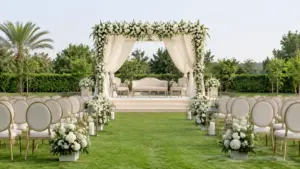
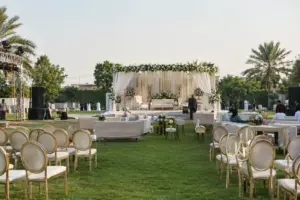
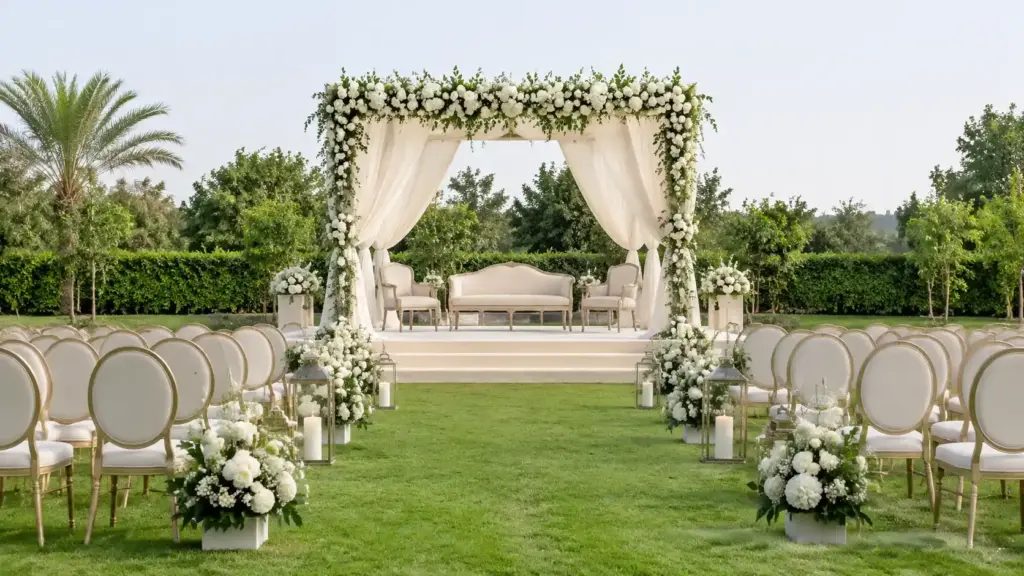
Outdoor wedding venues provide an open environment with natural surroundings and flexibility in decoration.
These locations can accommodate customized stages, floral arrangements, decorative entrances, themed seating and elaborate lighting installations.
However, outdoor wedding planning requires additional attention to seasonal weather, flooring, electricity, temperature control and guest facilities.
Marquees and Covered Outdoor Venues
Marquees offer an alternative between traditional banquet halls and completely open-air settings.
They can provide protection from certain weather conditions while retaining flexibility for customized decoration, seating and event layouts.
Depending on the available infrastructure, marquees can accommodate large guest lists, dining arrangements and elaborate wedding stages.
Farmhouses and Private Event Spaces
Farmhouses and private properties are also considered for intimate gatherings and customized wedding celebrations.
They can offer additional space for outdoor decoration, photography, entertainment and private dining arrangements.
However, families should carefully inspect accessibility, parking, washrooms, power backup, security and catering facilities before confirming a booking.
- Match the Venue to Your Wedding Function
Different wedding functions have different requirements. The selected venue should reflect the purpose, atmosphere and guest expectations of each celebration.
Mehndi
Mehndi celebrations often involve colourful decoration, entertainment, performances and interactive guest areas.
An outdoor lawn or marquee can provide room for customized stages, decorative entrances, seating arrangements and entertainment installations.
For indoor functions, ceiling decoration, stage lighting and themed seating can create a festive atmosphere without requiring a large outdoor space.
Nikah
A Nikah ceremony may require a more intimate arrangement with appropriate seating, privacy and convenient access for immediate family members.
A smaller banquet hall, hotel event space or carefully organized outdoor setting can be suitable, depending on the guest count.
Barat
Barat celebrations often involve larger guest lists, elaborate stage arrangements, photography requirements and extensive catering operations.
Venue capacity should be evaluated according to the actual seating and dining layout rather than the maximum number of people a property advertises.
Walima
Walima receptions generally benefit from organized dining arrangements, comfortable seating, suitable lighting and convenient guest access.
Both banquet halls and well-managed outdoor venues can accommodate these requirements when the facilities match the event’s scale.
- Compare Outdoor and Banquet Wedding Requirements
One of the most important decisions during wedding planning is whether to host the celebration indoors or outdoors.
An outdoor wedding venue may offer natural surroundings and greater design flexibility, while a banquet hall generally provides a more controlled environment and established facilities.
The decision should consider several practical factors:
- Weather protection and seasonal suitability
- Venue rental and additional infrastructure expenses
- Guest capacity and seating arrangements
- Parking and accessibility
- Catering facilities and food-service arrangements
- Stage, lighting and decoration requirements
- Electricity and backup power
- Washrooms and guest facilities
- Setup and dismantling schedules
For a detailed breakdown of the advantages, limitations, costs and practical considerations, read this outdoor vs. banquet wedding comparison guide.
The most important consideration is to compare the complete event requirements rather than selecting a venue based only on its initial rental price.
- Calculate the Complete Wedding Venue Budget
Wedding venue expenses involve more than paying a booking fee. Families should prepare an overall budget that includes the facilities, services and infrastructure needed for the celebration.
An outdoor wedding may require separate arrangements for:
- Tent and marquee installations
- Flooring and weather protection
- Generators and electrical distribution
- Cooling or heating equipment
- Stage construction
- Decorative lighting
- Furniture and seating
- Catering stations
- Security and cleaning
A banquet hall may include several of these facilities within its booking package, although additional services can still involve separate charges.
Before confirming a venue, request an itemized quotation. Ask which facilities are included, which are optional and which suppliers must be arranged independently.
Also confirm the payment schedule, cancellation policy, overtime charges, security deposit and rescheduling conditions.
Comparing complete quotations makes it easier to understand the actual cost of each venue.
- Evaluate Guest Capacity and Movement
Guest capacity is one of the most important aspects of wedding venue selection.
A venue may advertise a capacity of several hundred guests, but its comfortable seating capacity can be considerably different once the stage, dining tables, entrance, photography areas and entertainment arrangements are included.
Consider the following factors:
Seating: Can guests sit comfortably without overcrowding?
Dining: Is there sufficient space for buffet counters, food stations and serving staff?
Accessibility: Can elderly guests and people with mobility limitations move around comfortably?
Parking: Is there enough parking or a suitable valet arrangement?
Guest movement: Can attendees reach the stage, dining area and washrooms without unnecessary congestion?
Family arrangements: Is there sufficient flexibility to accommodate different family groups?
For larger weddings, the venue layout should be prepared before finalizing decoration and catering arrangements.
- Plan Wedding Decoration Around the Venue Structure
Wedding decoration should complement the venue instead of forcing an unsuitable design into the available space.
An outdoor wedding may allow floral installations, decorative entrances, suspended lighting, themed seating and larger stage structures.
A banquet hall may offer existing architectural features, chandeliers, ceiling installations and defined stage areas that can be incorporated into the design.
Before finalizing a decoration concept, check:
- Venue dimensions and ceiling height
- Stage measurements
- Available installation points
- Electrical access
- Decoration restrictions
- Vendor setup hours
- Safety and structural requirements
Families considering event decoration services in Pakistan should evaluate the venue layout, event theme and decoration requirements together.
This helps prevent unnecessary design changes, installation problems and additional expenses during the final preparation stages.
- Consider Lighting and Technical Production
Lighting is more than a decorative feature. It influences stage visibility, photography, guest movement and the atmosphere of the celebration.
Outdoor weddings may require lighting across entrances, walkways, dining spaces, stages and seating sections.
Indoor venues may need additional stage illumination, ambient lighting, decorative fixtures and technical adjustments to complement existing ceiling lights.
Larger celebrations may also require:
- Professional sound systems
- Stage lighting
- LED screens
- Microphones
- Generator backup
- Technical operators
- Cable management
- Entertainment coordination
All electrical and production arrangements should be discussed with venue management before installation begins.
A technical inspection before the wedding can help identify potential issues with sound, lighting, power supply and equipment placement.
- Check Catering Arrangements Before Booking
Food service can significantly influence the wedding venue decision.
Some banquet halls provide their own catering arrangements or work with preferred suppliers, while other venues allow families to hire an external catering company.
Outdoor locations may require additional kitchen facilities, food preparation areas, serving counters, equipment and arrangements to maintain food quality during service.
Before signing a venue agreement, confirm:
- Whether outside catering is permitted.
- Whether the venue charges additional catering fees.
- Whether buffet or table service is available.
- Where food preparation and serving areas will be located.
- Whether sufficient electrical and water facilities are available.
- How food replenishment and waste management will be handled.
The catering plan should be finalized alongside the venue layout rather than treated as a completely separate decision.
Families should also consider menu selection, guest preferences, serving capacity, and the expected duration of the event.
- Coordinate All Wedding Vendors Under One Timeline
A wedding involves multiple suppliers who must work according to the same schedule.
The decoration team needs access to the venue before guests arrive. Catering staff require sufficient preparation time. Photography teams need to understand the event schedule, while entertainment and technical teams must coordinate equipment and performance timings.
Without a shared schedule, even a suitable venue can become difficult to manage.
A practical vendor coordination plan should include:
- Venue access and setup time
- Decoration installation
- Stage and lighting checks
- Catering preparation
- Vendor arrival and equipment inspection
- Guest arrival schedule
- Photography and entertainment timings
- Food-service schedule
- Event closing and dismantling
Families organizing several wedding functions may benefit from professional coordination across venue arrangements, decoration, catering, production and event-day management.
For a broader overview of these requirements, explore wedding event management and planning services.
Professional coordination can help keep suppliers aligned with the event schedule and reduce communication gaps during preparation.
- Questions to Ask Before Confirming a Wedding Venue
Before paying an advance, arrange a physical inspection and ask the venue management the following questions:
- What is the comfortable seated guest capacity?
- Which facilities are included in the booking price?
- Are outside catering services permitted?
- What are the decoration and installation rules?
- How many hours are available for event setup?
- Is generator backup available?
- What arrangements are available for elderly and disabled guests?
- Is parking included?
- What happens if the event date needs to change?
- Are there additional charges for overtime or extra services?
Ask for important terms in writing instead of relying entirely on verbal assurances.
If possible, visit the venue during an event with a similar guest count. This provides a more realistic understanding of the available space, service arrangements and guest movement.
- A Practical Wedding Venue Selection Checklist
Use this checklist before making the final booking decision.
Venue and Facilities
- Guest capacity confirmed
- Venue location inspected
- Parking arrangements checked
- Washrooms and accessibility reviewed
- Booking conditions understood
Budget
- Complete venue quotation received
- Additional infrastructure costs calculated
- Decoration expenses considered
- Catering charges confirmed
- Payment and cancellation terms reviewed
Event Planning
- Stage and seating layout prepared
- Catering arrangements confirmed
- Lighting and sound requirements discussed
- Vendor access scheduled
- Event-day responsibilities assigned
Guest Experience
- Comfortable seating available
- Dining arrangements planned
- Entrance and exit routes checked
- Weather contingency prepared
- Family and VIP requirements considered
A venue should only be confirmed after its facilities, costs, and operational requirements have been evaluated together.
Conclusion
Choosing the right wedding venue in Pakistan requires more than selecting an attractive location. Couples need to consider the wedding function, guest count, seasonal conditions, budget, decoration possibilities, catering arrangements, and technical requirements.
Banquet halls can provide convenience and a controlled environment, while outdoor lawns, marquees and farmhouses offer different opportunities for customized celebrations.
Neither option is automatically better. The most suitable choice is the one that supports the family’s priorities and the practical requirements of the event.
By evaluating the complete venue arrangement before booking, families can make more informed decisions and reduce avoidable complications during wedding preparation.