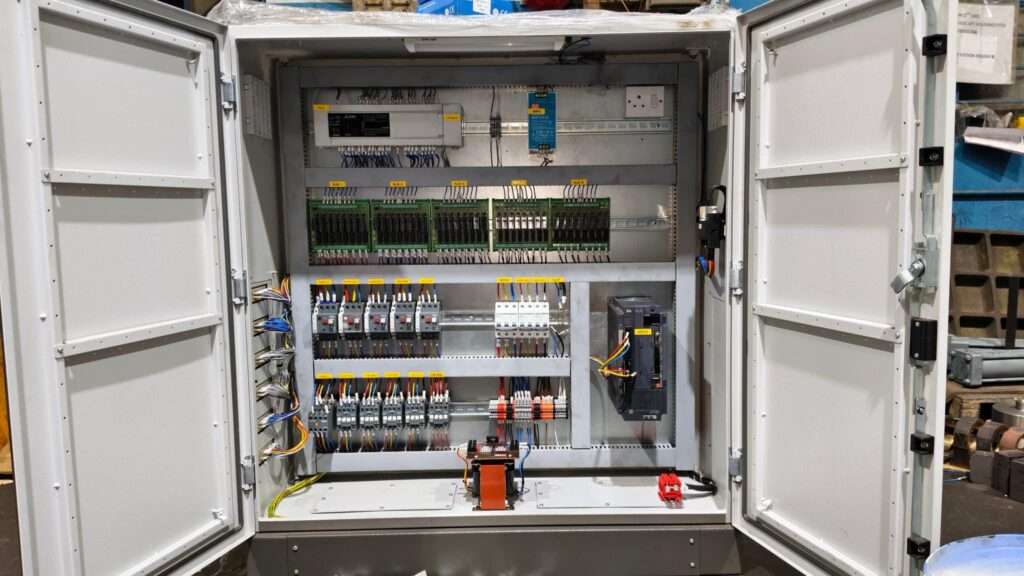

How a Control Panel with PLC Improves Industrial Automation
Industrial automation helps businesses manage machines, production lines and electrical equipment with greater control and consistency. One important part of an automated system is a control panel with PLC (Programmable Logic Controller). It receives signals from field devices, processes programmed instructions and controls connected equipment according to the required operation.
PLC-based systems are used in manufacturing plants, material handling systems, packaging uControl Panel with PLC: Components, Working & Benefitsnits, water treatment facilities and other industrial applications. Understanding their components and working principles helps businesses make informed decisions when planning an automation system.
What Is a Control Panel with PLC?
A control panel with PLC is an electrical enclosure that contains a programmable logic controller and other electrical components used to monitor and control industrial equipment. The PLC acts as the main control unit. It receives input signals from sensors and switches, processes the programmed logic and sends output signals to connected devices.
For example, in a production line, sensors can detect the position of a product. The PLC processes this information and sends commands to motors, conveyors or other equipment to perform the required operation.
This arrangement allows different machines and processes to operate according to a defined sequence.
Main Components of a PLC Control Panel
A PLC-based panel contains several electrical and control components. Each component performs a specific function within the automation system.
1. Programmable Logic Controller (PLC)
The PLC is the central processing unit. It executes the programmed instructions and manages communication between input and output devices.
2. Power Supply
The power supply provides the required operating voltage to the PLC and associated control devices. A suitable power supply helps maintain stable operation.
3. Input and Output Modules
Input modules receive signals from sensors, push buttons and switches. Output modules send control signals to devices such as contactors, relays, solenoid valves and indicators.
4. Circuit Protection Devices
MCBs, MCCBs and other protective devices help protect electrical circuits against faults and overcurrent conditions. Their selection depends on the system requirements.
5. Relays and Contactors
Relays and contactors are used for switching electrical loads. They allow PLC output signals to control equipment that requires separate switching arrangements.
6. HMI and Indicators
A Human Machine Interface (HMI) allows operators to view machine information and interact with the automation system. Indicator lamps can display operating conditions and fault status.
How Does a PLC Control Cabinet Work?
A PLC control cabinet operates through a continuous process of receiving inputs, processing instructions and controlling outputs.
The basic working sequence includes:
-
Input detection: Sensors, switches and other field devices send signals to the PLC.
-
Signal processing: The PLC reads the incoming signals and executes its programmed logic.
-
Output operation: The PLC activates or deactivates connected output devices according to the program.
-
Equipment monitoring: Feedback signals help the system monitor equipment conditions.
-
Fault indication: Alarms and indicators can inform operators when abnormal conditions are detected.
For example, an automated water pumping system can use level sensors to monitor the water level. When the level reaches a programmed limit, the PLC can send a command to start or stop the pump.
Important Applications of Electrical PLC Control
Electrical PLC control is used in different industries because it allows machines and processes to follow programmed operating sequences.
Common applications include:
-
Manufacturing: Controlling production machines, assembly lines and automated processes.
-
Material Handling: Operating conveyors, lifts and material transfer systems.
-
Water Treatment: Managing pumps, valves and water-level monitoring.
-
Packaging: Coordinating filling, sealing, labelling and packaging equipment.
-
HVAC Systems: Controlling ventilation equipment, pumps and other building services.
-
Process Industries: Monitoring operating conditions and controlling equipment in industrial processes.
The actual configuration depends on the equipment, operating sequence and control requirements of each application.
Benefits of Using a PLC-Based Control System
A properly planned PLC-based system can provide several operational benefits.
Flexible Programming: PLC logic can be modified when process requirements change, subject to the hardware and system design.
Centralised Control: Multiple machines and devices can be managed through a common control arrangement.
Consistent Operation: Programmed sequences help equipment perform operations in a defined and repeatable manner.
Fault Monitoring: Alarms, feedback signals and diagnostic functions can help operators identify operating issues.
System Integration: PLCs can communicate with compatible HMIs, drives, sensors and other automation equipment.
These benefits make PLC-based automation suitable for industrial processes that require coordinated equipment control.
What Should You Consider Before Selecting a PLC Panel?
Selecting an appropriate panel requires an understanding of the application and electrical requirements. Consider the following points before finalising a system:
-
Number and type of input and output signals.
-
PLC make, model and processing requirements.
-
Required control voltage and power supply.
-
Motor and equipment operating requirements.
-
Circuit protection and electrical safety.
-
Enclosure size, mounting arrangement and IP rating.
-
Communication requirements with HMI, VFDs and other systems.
-
Future expansion and maintenance requirements.
The panel configuration should match the actual application rather than relying on a standard arrangement for every installation.
Conclusion
A control panel with PLC plays an important role in industrial automation by connecting field devices, processing control instructions and managing equipment operation. Its components work together to support monitoring, machine control and automated sequences across different industrial applications.
Before choosing a PLC-based system, businesses should evaluate their process requirements, connected equipment, protection needs and future expansion plans. A suitable panel configuration can help establish a well-organised and manageable industrial control system.
For information about PLC-based electrical control panel solutions, explore Burak Electric PLC Panels.
About Burak Electric
Burak Electric manufactures and supplies electrical control panels for industrial automation, power distribution and control applications. The company provides PLC panels and other electrical panel solutions for industrial requirements. Visit Burak Electric to learn more about its products and services.