
A business’s online reputation is no longer shaped only by its website or traditional search rankings. People discover companies through social platforms, review websites, online publications, search engines, and increasingly, AI-powered tools.
These technologies are changing how users research businesses. Instead of opening several websites and comparing information manually, someone can ask an AI assistant to explain available services, identify important differences, or summarize potential solutions.
For companies, this creates a new opportunity to make their expertise more visible. However, it also means that their digital information must be accurate, consistent, and genuinely useful.
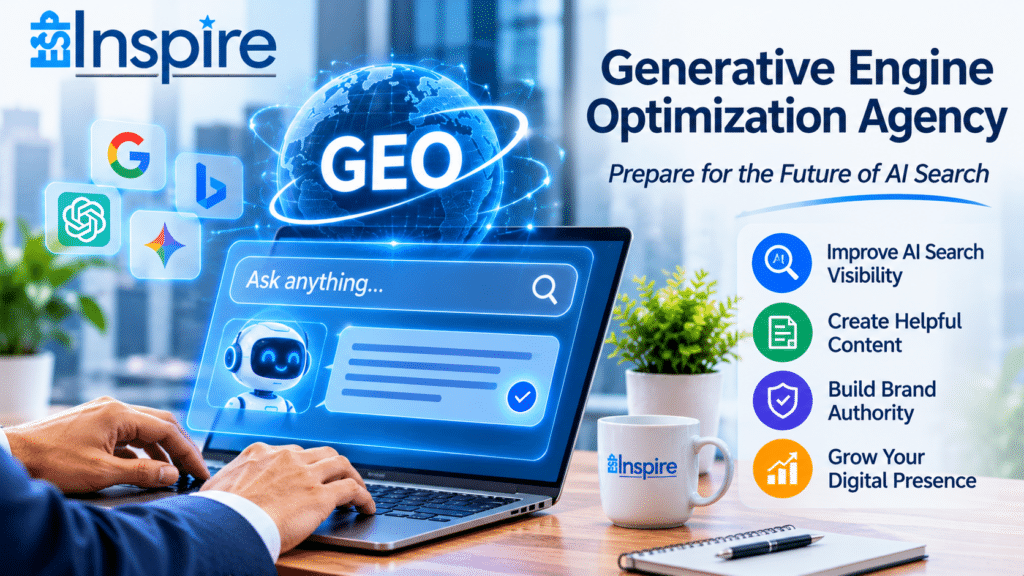
Generative Engine Optimization (GEO) addresses this changing environment by helping businesses improve how their information is organized and presented for AI-driven discovery.
The Growing Importance of Brand Discovery
Brand discovery happens when potential customers first encounter a company while researching a product, service, or solution.
In the past, this process often began with a simple search query. Users would browse website listings, compare pages, and gradually develop an understanding of different providers.
Today, AI-powered platforms can summarize information and provide conversational recommendations. This makes it increasingly important for businesses to maintain a clear and informative digital presence.
A company should communicate what it does, whom it serves, and what makes its expertise relevant. Unclear service descriptions and inconsistent business information can make it harder for people to understand the brand.
Why Consistent Information Builds Digital Trust
Customers often encounter the same business across multiple online platforms. They may visit its website, read an industry article, explore a professional directory, or review customer feedback.
If the information differs significantly between these sources, it can create confusion.
Businesses should maintain consistency in important details such as:
-
Official company name and business description.
-
Products and services offered.
-
Industry expertise and areas of specialization.
-
Contact information and business location.
-
Author biographies and professional credentials.
Consistency does not mean copying identical content everywhere. Each platform should provide information appropriate to its audience while accurately representing the business.
How a Generative Engine Optimization Agency Helps Businesses
Adapting a digital presence for AI-driven discovery requires more than publishing additional blog posts. Businesses need a strategy that connects content quality, technical accessibility, brand authority, and customer search behavior.
A generative engine optimization agency can help organizations evaluate these areas and identify opportunities to improve their online visibility.
Typical GEO activities may include:
Brand visibility research: Reviewing how a business appears across relevant AI-powered search experiences.
Content improvements: Developing informative pages that answer customer questions and explain services clearly.
Entity and brand consistency: Organizing business information so that its identity and expertise are communicated accurately.
Technical website optimization: Improving crawlability, internal linking, page structure, and appropriate structured data.
Authority development: Identifying relevant opportunities for expert contributions, industry publications, and credible third-party references.
Businesses looking to understand this approach can explore ESPInspire’s generative engine optimization services for information about modern AI search optimization.
The aim is to make a business’s online information more useful and accessible, not to promise guaranteed inclusion in AI-generated responses.
Creating Content Around Real Customer Decisions
One effective GEO approach is to develop content around the decisions customers make before choosing a business.
For instance, someone considering a digital marketing provider may want to understand the difference between SEO and GEO, how optimization projects work, what factors influence pricing, and how results can be evaluated.
A company can address these concerns through detailed guides, service pages, comparison articles, and frequently asked questions.
Each resource should provide a clear explanation rather than simply promoting the business. Practical examples and relevant supporting information can make the content more valuable.
This also helps create a connected library of resources that visitors can explore according to their needs.
The Role of Technical Structure in AI Search
Even high-quality information needs a technically accessible website.
Businesses should make sure important pages can be crawled and indexed where appropriate. Navigation should be straightforward, headings should describe their sections accurately, and internal links should connect related topics.
Structured data can provide search engines with additional context about supported entities and page content. However, markup must accurately reflect what visitors can see on the page.
Other important considerations include:
-
Fast and reliable website performance.
-
Mobile-friendly page layouts.
-
Descriptive page titles and URLs.
-
Clear internal linking.
-
Accessible images and meaningful alternative text.
-
Regular content maintenance.
These improvements support a strong technical foundation for traditional search and broader AI discovery.
GEO, SEO, and the Customer Journey
Generative Engine Optimization and traditional SEO have overlapping foundations, but they address different aspects of online discovery.
SEO helps businesses improve their visibility in organic search results. GEO considers how generative AI systems may interpret and reference online information.
Both approaches can support different stages of the customer journey.
A person may initially discover a business through a search result, use an AI assistant to research its services, and later visit the company’s website to request a consultation.
A connected content strategy helps provide useful information at each stage. Educational articles can introduce topics, service pages can explain available solutions, and case studies can demonstrate relevant experience.
Evaluating Long-Term GEO Performance
AI search visibility can be difficult to measure because different platforms may generate different responses for similar questions.
Businesses should therefore combine several performance indicators instead of relying on a single metric.
Useful measurements include organic search impressions, relevant website traffic, brand mentions, referral visits, conversions, and citations in AI-generated answers where observable.
Regular reviews can help companies understand which topics attract interest and which pages need improvement.
It is also important to distinguish measurable results from assumptions. A business should not treat one appearance in an AI-generated answer as proof of consistent visibility.
Conclusion
AI-powered discovery is changing how people research brands and evaluate services. Companies that maintain accurate information, publish helpful resources, and build credible digital reputations can create a stronger foundation for this evolving environment.
Generative Engine Optimization brings these activities together through a strategy focused on content quality, technical accessibility, and brand understanding.
By combining GEO with established SEO practices, businesses can make their expertise easier to discover and provide a more informative experience for potential customers. Read more blog