
The term Klow 80 mg peptide generally refers to an 80 mg research blend containing four different peptides: GHK-Cu, BPC-157, TB-500 and KPV. The commonly reported composition is 50 mg GHK-Cu, 10 mg BPC-157, 10 mg TB-500 and 10 mg KPV, giving a total of 80 mg per vial.
One important distinction is that 80 mg refers to the combined amount of the four compounds in the research vial, not an 80 mg dose for a person. Klow is also not a single peptide molecule. It is a co-formulation in which separate peptide compounds are supplied together.
That distinction matters when interpreting research papers, product specifications and claims made online.
For researchers also investigating related peptide blends, Clova Care’s provides a relevant three-component comparison point. The exact current product details should always be checked directly on the live product page.
What Is Klow 80 mg Peptide?
Klow is generally described as a four-component research peptide blend consisting of:
- GHK-Cu – 50 mg
- BPC-157 – 10 mg
- TB-500 – 10 mg
- KPV – 10 mg
Together, these components total 80 mg. The commonly cited mass ratio is therefore 50:10:10:10. GHK-Cu accounts for 62.5% of the total mass, while each of the other three components accounts for 12.5%.
The term Klow is a community/vendor designation rather than the name of an FDA-approved pharmaceutical combination. There is no established approved Klow medicine containing this four-peptide combination. See DA safety information for substances proposed for compounding.
Most importantly, researchers should not interpret the 80 mg figure as a validated human dosage. Current references describing the blend explicitly distinguish vial composition from clinical dosing, because no validated human dosage or frequency has been established for the complete four-peptide combination.
Klow 80 mg Peptide Composition
| Component | Amount commonly listed | Approx. share of total |
|---|---|---|
| GHK-Cu | 50 mg | 62.5% |
| BPC-157 | 10 mg | 12.5% |
| TB-500 | 10 mg | 12.5% |
| KPV | 10 mg | 12.5% |
| Total | 80 mg | 100% |
The four substances have different structures and different research histories.
This means that the blend should not be treated as though all 80 mg represents one active ingredient.
GHK-Cu
GHK-Cu is a copper-containing tripeptide that has been studied extensively in laboratory research involving extracellular-matrix biology, collagen-related processes, tissue remodelling and inflammatory pathways.
It is also the largest component of the commonly cited Klow formulation by mass.
A 2026 systematic review of GHK-Cu in aesthetic medicine found promising preclinical findings but noted a lack of standardised clinical guidelines.
Another 2026 systematic review examining GHK-Cu and microneedle delivery found that the clinical literature remains limited and fragmented, with the stronger evidence base coming from preclinical research. See
These findings provide research context for GHK-Cu but do not establish the effectiveness of the complete Klow blend.
BPC-157
BPC-157 is a synthetic pentadecapeptide that has been investigated extensively in preclinical models involving tissue injury, inflammation, vascular signalling and musculoskeletal repair.
A 2026 review examining BPC-157’s pharmaceutical development reported substantial preclinical research but noted that there is no approved formulation, no validated dosing regimen and no completed Phase II clinical trial. See
A systematic review of BPC-157 in orthopaedic sports medicine similarly found that the literature was overwhelmingly preclinical: 35 of the 36 included studies were preclinical, with only one clinical study identified. The authors also highlighted the lack of clinical safety data.
Consequently, laboratory findings involving BPC-157 should not automatically be presented as evidence of a clinically established treatment.
TB-500
TB-500 is associated with research into thymosin-related biology, cellular migration and tissue-repair processes.
An important issue when reading the literature is that research involving full-length thymosin beta-4 should not automatically be treated as equivalent to research involving every TB-500 preparation.
The exact identity, sequence and formulation therefore matter.
This is especially important when researchers compare product labels with published studies. A paper studying one peptide sequence or formulation does not necessarily establish the properties of another preparation simply because both are marketed using similar terminology.
KPV
KPV is a short tripeptide corresponding to the C-terminal sequence of alpha-melanocyte-stimulating hormone.
Research has examined KPV in inflammatory signalling and experimental intestinal inflammation. FDA briefing material for its 2026 Pharmacy Compounding Advisory Committee meeting describes nonclinical research in which KPV showed anti-inflammatory properties, while also noting that its molecular targets remain uncertain.
The FDA meeting agenda included KPV-related bulk drug substances among the substances being evaluated by the advisory committee. That regulatory review should not be confused with FDA approval of KPV or the Klow combination.
Why Is Klow 80 mg Mostly GHK-Cu?
The commonly reported 80 mg composition places 50 mg of the total 80 mg in GHK-Cu.
That means GHK-Cu represents approximately 62.5% of the total mass.
The remaining three peptides are each listed at 10 mg.
This difference is important because comparing the peptides solely by their milligram quantities can be misleading. Different molecules have different molecular weights, structures and biological properties, so mass alone does not tell researchers how much biological activity a particular component will produce.
The 50/10/10/10 figures should therefore be interpreted as formulation quantities, not as a measure of relative potency.
Is Klow 80 mg the Same as an 80 mg Dose?
No.
This is one of the most important points when researching the keyword klow 80 mg peptide.
An 80 mg vial means that the labelled total quantity of the four components is 80 mg.
It does not mean:
- 80 mg of one peptide
- 80 mg of BPC-157
- 80 mg of GHK-Cu
- 80 mg of a validated therapeutic dose
- 80 mg that should be administered to a person
Current references specifically describe the 80 mg figure as total vial composition rather than a clinically validated dosage.
Is Klow 80 mg Clinically Tested as a Combination?
This is where the evidence becomes particularly important.
The research supporting the four components comes largely from individual-compound studies.
That is different from studying:
GHK-Cu + BPC-157 + TB-500 + KPV together
in the same experimental preparation.
Current Klow research references state that the complete four-peptide combination has not been evaluated in a controlled clinical study.
Therefore, evidence concerning one component cannot automatically establish the safety or efficacy of the complete blend.
For example:
GHK-Cu research = Klow research
BPC-157 research = Klow research
KPV research = Klow research
TB-500 research = Klow research
The complete combination requires its own evidence.
What Does the Research Actually Tell Us?
A 2026 scoping review examining emerging peptides in sports medicine found that 67% of the identified publications used preclinical animal models. Human studies were limited, and the authors concluded that claimed benefits for musculoskeletal recovery and performance remained unsubstantiated by current human trials. See
This broader evidence problem applies when interpreting Klow.
The individual components may have interesting biological mechanisms, but mechanistic plausibility is not the same as demonstrated clinical efficacy.
Researchers should therefore separate three levels of evidence:
1. Mechanistic evidence
A peptide produces a measurable biological effect in cells or biochemical systems.
2. Preclinical evidence
The compound produces an effect in animal models.
3. Clinical evidence
The compound or formulation has been studied in appropriately designed human trials.
Moving from level one or two to level three requires substantially more evidence.
Klow 80 mg vs Glow
Klow is often compared with Glow because the two formulations share three components.
The commonly described distinction is:
Glow: GHK-Cu + BPC-157 + TB-500
Klow: GHK-Cu + BPC-157 + TB-500 + KPV
Therefore, KPV is the principal additional component associated with Klow.
Clova Care’s relevant Glow page is:
This makes the two formulations interesting from a research-design perspective because KPV could theoretically represent an additional variable when comparing the two blends.
However, a comparison between the products would still require controlled testing to determine whether adding KPV changes a measurable outcome.
What Should Researchers Check Before Evaluating an 80 mg Klow Product?
The number “80 mg” alone is not enough to establish product quality.
Researchers should examine the complete specification and ask:
Is the formulation clearly stated?
The label should identify each component and its quantity.
For the commonly cited Klow formulation, that means checking whether the documentation actually states:
- 50 mg GHK-Cu
- 10 mg BPC-157
- 10 mg TB-500
- 10 mg KPV
Is there batch-level documentation?
A certificate of analysis can be useful when it is genuinely associated with the specific batch.
Researchers should check:
- Batch or lot number
- Identity testing
- Purity testing
- Analytical method
- Report date
- Laboratory identity
- Tested quantity
- Whether all claimed components were evaluated
A generic laboratory statement does not necessarily establish the properties of a particular vial.
Does the analytical report match the label?
This is particularly important for multi-component blends.
A report showing the identity or purity of one component does not necessarily verify every component in the formulation.
Why the Exact TB-500 Identity Matters
Another technical issue is terminology.
Some literature concerns thymosin beta-4, while commercial research products may use the term TB-500.
Researchers should therefore verify the exact peptide identity and sequence before applying findings from one compound to another.
This is an important example of why a product name should never substitute for chemical specification.
Can the 80 mg Figure Be Used to Compare Products?
Only cautiously.
Suppose two products are both labelled “Klow 80 mg.”
That does not automatically establish that they are equivalent.
Researchers should compare:
- Component quantities
- Peptide identity
- Sequence information
- Batch documentation
- Purity
- Analytical methods
- Storage requirements
- Formulation characteristics
The total mass may be identical while other characteristics differ.
Safety and Regulatory Considerations
Klow should be approached as an investigational research formulation, not as an established human treatment.
The scientific literature on several of its components remains limited in humans. For example, recent reviews continue to identify major translational gaps for BPC-157, while GHK-Cu research has a much larger preclinical evidence base than clinical evidence base.
Regulatory review also does not equal approval. The FDA’s 2026 advisory-committee materials included BPC-157, KPV and TB-500 among substances being evaluated for compounding considerations.
Researchers should also be cautious about online claims that convert laboratory findings into promises about human healing, inflammation, performance or cosmetic outcomes.
Anyone considering using an investigational peptide personally should speak with a qualified doctor or pharmacist, particularly if they have an existing medical condition or take prescription medicines.
Klow 80 mg Peptide: Key Facts at a Glance
| Question | Evidence-based answer |
|---|---|
| What does Klow 80 mg usually mean? | An 80 mg four-peptide research blend |
| What is commonly included? | GHK-Cu, BPC-157, TB-500 and KPV |
| Common composition | 50 mg + 10 mg + 10 mg + 10 mg |
| Is 80 mg a human dose? | No; it refers to total vial composition |
| Is Klow one peptide? | No; it is a co-formulation of separate peptides |
| Is the complete blend clinically established? | No |
| Are individual components researched? | Yes, predominantly in preclinical research |
| Is Klow FDA-approved as a combination? | No |
| Does a product label alone establish purity? | No; batch-level analytical documentation is preferable |
Final Takeaway
Klow 80 mg peptide generally refers to a four-component research blend containing 50 mg GHK-Cu, 10 mg BPC-157, 10 mg TB-500 and 10 mg KPV. The resulting 80 mg figure represents the combined amount of the four compounds in the commonly cited research formulation, not a validated human dose.
The individual peptides have different research profiles. GHK-Cu is strongly represented in extracellular-matrix and regenerative research, BPC-157 has been investigated extensively in preclinical tissue-repair models, TB-500 is associated with thymosin-related cellular and repair research, and KPV has been studied particularly in inflammatory signalling and experimental inflammation models.
However, evidence for the individual compounds should not be mistaken for evidence that the complete Klow combination works in humans.
For researchers, the most important considerations are therefore exact composition, peptide identity, batch documentation, analytical testing, research model and evidence level rather than the 80 mg number alone.
For comparison with a three-component formulation, researchers can also review Clova Care’s while keeping the distinction between individual-component evidence and combination-level evidence clear.
The four-component KLOW blend discussed here is distinct from the three-component GLOW listing. No KLOW product is listed in the current Clova Care catalogue.
Related reading
Sources
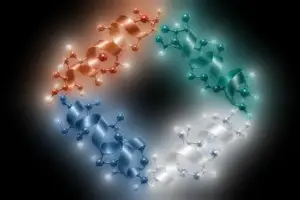
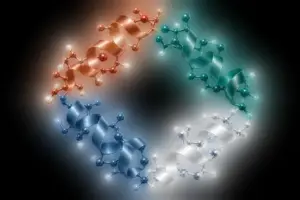
Source information checked on 29 September 2026. US FDA assessments describe US regulatory evidence; they do not establish UK authorisation. Illustrations are conceptual editorial images, not actual product photographs, test reports or clinical results.
Published by Clova.