
The human body is made up of countless microscopic structures that work together to maintain life. While gross anatomy helps us understand organs and body systems, microscopic anatomy takes us deeper into the cells and tissues that form them. For medical students, understanding these structures is an essential part of developing a strong foundation in medical science.
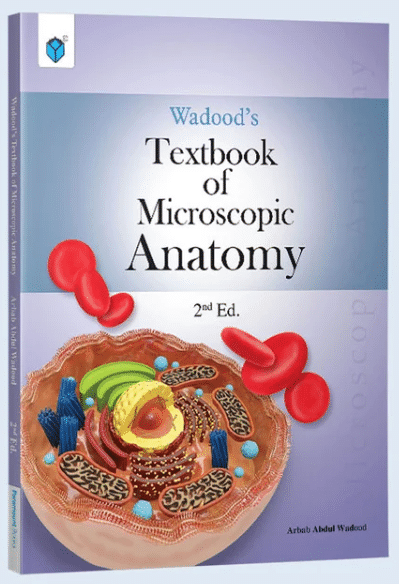
Wadood’s Textbook of Microscopic Anatomy, 2nd Edition is a textbook for students exploring the microscopic organisation of the human body and developing their understanding of histology.
What Is Microscopic Anatomy?
Microscopic anatomy is the study of structures that cannot be examined properly with the naked eye. It focuses mainly on cells, tissues and the microscopic organisation of organs.
Histology is an important part of this subject because it explains how different tissues are arranged and how their structures support specific functions. This knowledge helps students understand the relationship between the microscopic and functional aspects of the human body.
Why Is Microscopic Anatomy Important in Medical Education?
Microscopic anatomy provides a foundation for several important medical subjects. Students who understand normal tissue organisation are better prepared to explore how different organs function and how diseases affect cellular structures.
Some important areas supported by histology include:
Anatomy: Understanding the microscopic organisation of organs and tissues.
Physiology: Connecting cellular structures with their functions.
Pathology: Learning how abnormal changes affect normal tissues.
Clinical Medicine: Building connections between basic medical sciences and clinical concepts.
For this reason, histology is an important subject for students pursuing medical education.
Understanding the Four Basic Types of Tissues
One of the foundations of microscopic anatomy is the study of the four primary tissue types found in the human body.
Epithelial Tissue
Epithelial tissue covers body surfaces, lines internal cavities and forms glands. Its functions include protection, absorption, secretion and filtration.
Connective Tissue
Connective tissue supports, connects and protects different body structures. Blood, cartilage, bone and adipose tissue are examples.
Muscle Tissue
Muscle tissue is responsible for movement. It includes skeletal, cardiac and smooth muscle, each with distinct structural and functional characteristics.
Nervous Tissue
Nervous tissue consists mainly of neurones and supporting cells. It plays an essential role in receiving, processing and transmitting information throughout the body.
Understanding these tissue types helps students recognise the microscopic organisation of different organs.
How Can Medical Students Study Histology Effectively?
Histology can be challenging because it requires students to recognise microscopic structures and understand their functions. A systematic approach can make learning easier.
Start with basic concepts: Understand cells and the four primary tissue types before moving towards more complex organ structures.
Use visual learning: Study labelled diagrams, histological images and microscope slides to improve identification skills.
Connect structure with function: Rather than memorising features individually, understand why tissues have particular structural characteristics.
Revise consistently: Regular practice helps students recognise tissue patterns and remember important microscopic details.
Choose suitable textbooks: Reliable academic resources can support classroom learning, independent study and examination preparation.
Exploring Wadood’s Textbook of Microscopic Anatomy, 2nd Edition
For students interested in microscopic anatomy, Wadood’s Textbook of Microscopic Anatomy, 2nd Edition is a textbook worth exploring as part of their study resources.
Students can consider it alongside their prescribed curriculum, lectures, practical laboratory sessions and other recommended academic materials to strengthen their understanding of histology and the microscopic organisation of the human body.
Selecting suitable learning resources is an important step towards developing a solid foundation in basic medical sciences.
Find medical textbooks at Paramount Books.
Since 1948, Paramount Books has been serving students, educators and readers with educational and academic publishing resources. Its collection includes medical textbooks, school books, children’s books and general reading materials.
Students looking for medical learning resources can explore Wadood’s Textbook of Microscopic Anatomy, 2nd Edition and other academic titles through Paramount Books.
Building a strong understanding of medical science starts with the right learning approach and suitable educational resources.