
Muscle pain is a common problem that can affect people of different ages and activity levels. It may occur after strenuous exercise, muscle strain, sports injuries, repetitive movements, poor posture, or certain underlying health conditions. Mild soreness may improve with rest, but pain that persists, becomes severe, or is associated with weakness or swelling should be evaluated by a qualified healthcare professional.
At OAIC, patients can receive Advanced Muscle Pain Treatment in Pakistan based on their symptoms, medical history, physical examination, and individual treatment needs. The goal of professional care is not simply to reduce discomfort but to identify the possible cause of pain and develop an appropriate recovery plan.
Understanding Muscle Pain
Muscle pain, medically known as myalgia, may affect a specific muscle or several areas of the body. The discomfort can feel like aching, stiffness, tenderness, cramping, or pain during movement. The cause and duration of muscle pain can vary considerably from one person to another.
Common causes include overuse, minor injuries, sports-related trauma, stress, infections, medication-related effects, and some chronic conditions. Because muscle pain has many possible causes, persistent symptoms should not automatically be assumed to be the result of simple muscle strain.
Common Causes of Muscle Pain
Some frequent causes of muscle pain include:
- Muscle strain and overuse
- Sports injuries
- Repetitive physical activity
- Poor posture
- Heavy lifting
- Muscle tension and stress
- Certain infections
- Nerve-related problems
- Some vitamin or electrolyte abnormalities
- Chronic musculoskeletal conditions
An accurate assessment can help distinguish a temporary muscle problem from pain associated with another medical condition.
Symptoms That Should Not Be Ignored
Muscle pain can be accompanied by several symptoms, including:
- Persistent aching or soreness
- Muscle stiffness
- Tenderness
- Swelling
- Muscle weakness
- Cramps or spasms
- Reduced flexibility
- Difficulty moving the affected area
Medical evaluation is particularly important when pain is severe, lasts longer than expected, does not improve with normal self-care, or occurs with symptoms such as significant weakness, fever, swelling, or breathing difficulties.
How Muscle Pain Is Evaluated
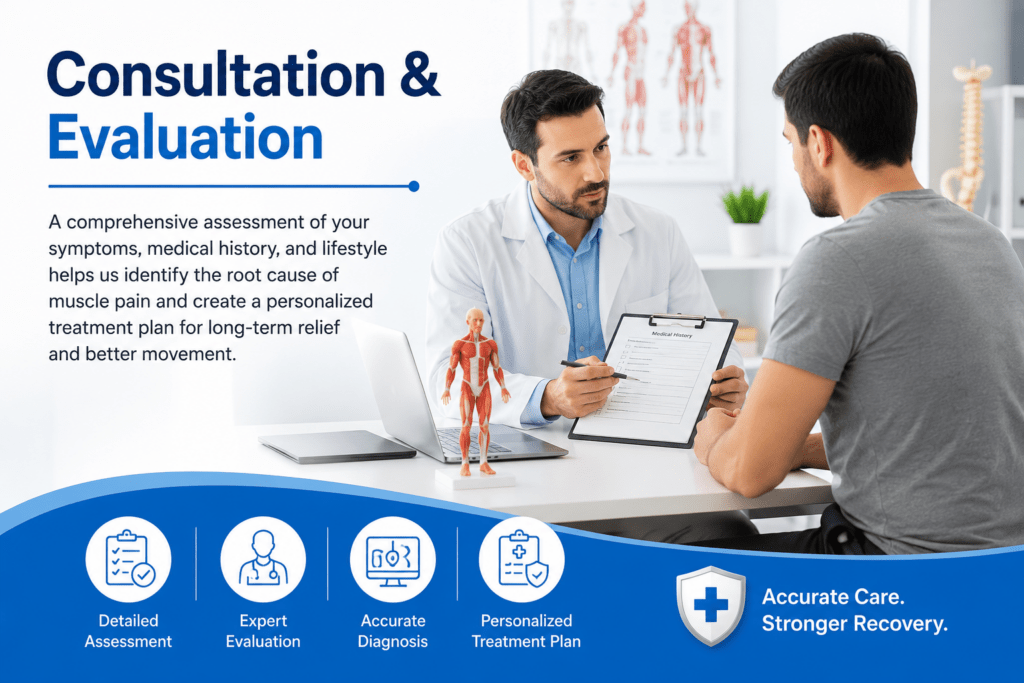
A professional evaluation usually starts with a discussion about the patient’s symptoms, medical history, activities, previous injuries, and medications. The healthcare provider may then perform a physical examination to assess muscle strength, tenderness, movement, and other relevant findings.
Additional investigations may be recommended when clinically appropriate. Depending on the suspected cause, these can include imaging studies or laboratory tests.
The purpose of diagnosis is to understand why the pain is occurring so that treatment can be directed toward the underlying problem rather than relying only on temporary pain relief.
Advanced Muscle Pain Treatment in Pakistan
Advanced Muscle Pain Treatment in Pakistan may involve different approaches depending on the cause and severity of the condition. A personalized treatment plan may include medication when appropriate, physiotherapy, rehabilitation exercises, activity modification, posture correction, and management of the underlying condition.
For muscle pain related to strain or overuse, healthcare professionals may recommend an appropriate period of rest followed by gradual return to activity. Physical therapy can also help patients restore flexibility, strength, and movement when it is clinically indicated.
Patients with sports injuries may require a structured rehabilitation program that gradually restores function while reducing the risk of reinjury.
Why Personalized Treatment Matters
There is no single treatment that works for every type of muscle pain. A treatment approach that is suitable for a simple strain may not be appropriate when pain is related to an underlying medical or neurological condition.
For this reason, experienced healthcare professionals consider the patient’s symptoms, examination findings, medical history, and diagnostic results before recommending treatment. This patient-centered approach supports safer and more appropriate care.
Supporting Recovery and Prevention
Patients can support healthy muscle function by maintaining regular physical activity, using proper exercise techniques, warming up before demanding activities, staying hydrated, and avoiding sudden increases in physical workload.
People who spend long periods sitting should also pay attention to posture and take regular movement breaks. Proper lifting techniques can help reduce unnecessary strain on muscles.
After an injury, patients should follow their healthcare professional’s advice regarding activity, stretching, strengthening, and return to exercise.
Why Choose Professional Orthopedic Care?
Professional orthopedic care provides patients with structured evaluation and treatment rather than relying solely on self-treatment. At OAIC, the focus is on understanding each patient’s condition and developing care according to individual needs.
Through Advanced Muscle Pain Treatment in Pakistan, patients can receive comprehensive support that may include assessment, diagnosis, treatment, rehabilitation, and follow-up care. This approach helps address the factors contributing to pain while supporting functional recovery.
When Should You Consult a Specialist?
You should consider professional medical evaluation if your muscle pain:
- Is severe or getting worse
- Continues despite rest and normal self-care
- Lasts longer than expected
- Follows a significant injury
- Is associated with swelling or redness
- Causes noticeable muscle weakness
- Makes normal movement difficult
Certain symptoms, such as severe weakness with difficulty performing routine activities, breathing problems, dizziness, or a serious injury that prevents movement, require urgent medical attention.
Conclusion
Muscle pain can have many different causes, and effective treatment begins with understanding the reason behind the symptoms. While minor soreness may improve with appropriate rest and self-care, persistent or unexplained pain deserves professional assessment.