
Punjab Launches Rs 100,000 Rahmat Card for 50,000 Widows and Orphans — Full Guide to Eligibility, Online Apply, and JazzCash Payment
Punjab has launched the Rahmat Card Scheme, a new digital financial assistance program for widows and orphans. In the first phase, 50,000 eligible families will receive Rs 100,000 each through direct JazzCash transfers.
The Punjab government says the scheme is backed by a Rs 5 billion allocation from the provincial Zakat Fund. Applications are processed through a NADRA-linked system to reduce delays, paperwork, and middlemen.
For families struggling with inflation, rent, school fees, and medical bills, this support can offer immediate relief. More importantly, it shows how welfare delivery in Pakistan is moving toward faster and more transparent digital systems.
Applicants should always use the official Punjab government portal and verified government sources for updates.
Table of Contents
- What is Rahmat Card Scheme
- Who Can Apply
- How to Apply Online
- How JazzCash Will Send Rs 100,000
- How Rahmat Card is Different from BISP and Other Schemes
- Why This Scheme Matters
- Risks and Challenges
- Frequently Asked Questions
What is Rahmat Card Scheme?
Rahmat Card is Punjab’s new digital welfare program for widows and orphan families.
Under this scheme, eligible applicants receive a one-time payment of Rs 100,000. This is not a monthly stipend. Instead, it is designed as emergency support for urgent household needs such as:
- food expenses
- rent
- medicines
- school fees
- electricity and gas bills
- small home-based business support
The first phase covers 50,000 families, with funding coming from Punjab’s Zakat system.
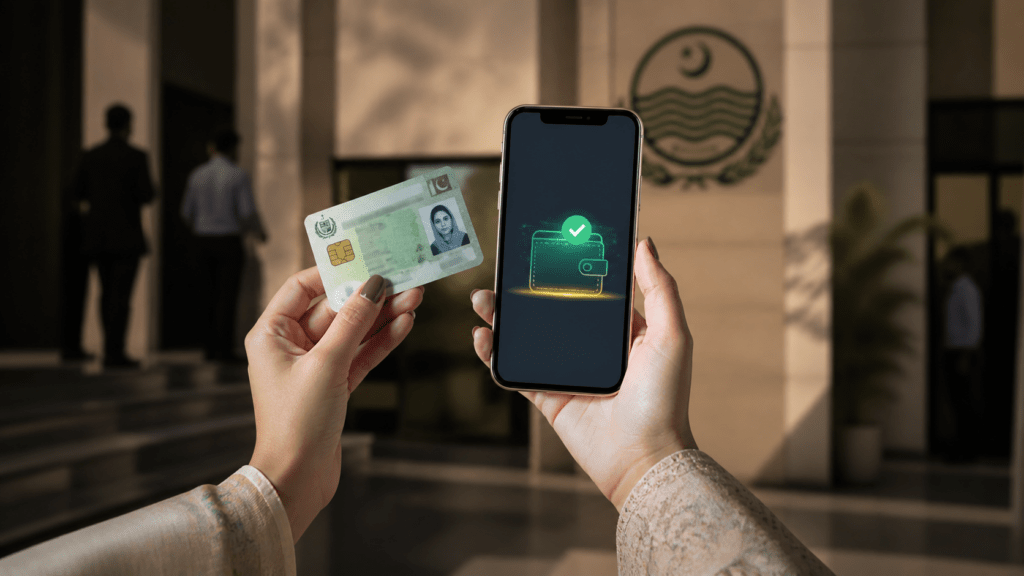
What makes this scheme different is direct payment into the beneficiary’s own JazzCash wallet. This reduces the old system of long office visits and manual approvals.
Trusted references:
Punjab Government Portal
NADRA Pakistan
Punjab Zakat & Ushr Department
Who Can Apply for Rahmat Card?
Basic Eligibility
According to official Punjab government guidelines, applicants must:
- be permanent residents of Punjab
- belong to a low-income household
- not be government employees
- not receive a government pension
For Widows
Applicants must have:
- widow status updated on NADRA CNIC
- husband’s death certificate if required
For Orphans
Applicants must have:
- valid B-Form
- child under 18 years of age
- valid guardian details
Mobile Requirement
The mobile number must be registered against the applicant’s CNIC.
This is necessary because JazzCash verification depends on CNIC-linked mobile registration.
Important Tip
Many applications fail because widow status is not updated at NADRA. This should be corrected first before applying.
Trusted references:
NADRA CNIC Services
Punjab Social Welfare Guidelines
Step-by-Step Guide to Apply Online
Step 1: Prepare Your Documents
Keep these ready:
- Original CNIC
- Husband’s death certificate
- B-Form for orphan applications
- Domicile if required
- Active mobile number linked to CNIC
Clear documents help avoid delays.
Step 2: Visit the Official Portal
Open:
rahmatcard.punjab.gov.pk
You can also use the official mobile app.
Click:
Apply Now
or
Register
Always use the official government portal to avoid scams.
Step 3: Choose Category
Select one:
- Bewa (Widow)
- Yateem (Orphan)
Choosing the correct category is important because verification rules are different.
Step 4: Verify Mobile Number
Enter your CNIC-linked mobile number.
You will receive an OTP code.
Enter the code to continue.
Step 5: Fill Personal Details
Add:
- full name
- CNIC number
- address
- district
- tehsil
- union council
For orphan applications, also add:
- child’s name
- B-Form number
- guardian relationship
Double-check spellings because small mistakes can cause rejection.
Step 6: Upload Documents and Submit
Upload:
- CNIC front and back
- death certificate
- B-Form
- domicile if requested
Then review the form and click:
Submit Application
You will receive a reference number.
Save it carefully for future tracking.
Step 7: Track Your Application
You can check status through:
Online Portal
Use the Check Status option on the same website.
Helpline
Call:
1077
Keep your CNIC and reference number ready.
Status usually shows:
- Under Verification
- Approved
- Rejected
How JazzCash Will Send Rs 100,000
After approval, beneficiary details are sent to JazzCash.
JazzCash checks:
- CNIC
- mobile number
- KYC verification
If the account is already verified, the payment is sent directly.
If not, limited verification may be required first.
Then the full Rs 100,000 is credited to the wallet.
How Beneficiaries Can Use the Money
They can:
- withdraw cash from JazzCash agents
- pay electricity and gas bills
- transfer money to family members
- keep balance in wallet for emergencies
Most importantly, there is no service charge for receiving this amount.
This protects the full value of the assistance.
Trusted references:
JazzCash Official Support
State Bank of Pakistan Digital Payment Guidelines
How Rahmat Card is Different from BISP and Other Schemes
Many people compare Rahmat Card with BISP and Ehsaas. However, there is an important difference.
Rahmat Card is focused only on widows and orphans.
BISP and Ehsaas mainly support general low-income households through monthly payments.
Quick Comparison
| Feature | Rahmat Card | BISP / Ehsaas |
|---|---|---|
| Target Group | Widows & Orphans | General Poor Families |
| Payment Type | One-time Rs 100,000 | Monthly Support |
| Delivery | App + JazzCash | Mixed Methods |
| Verification | NADRA + Zakat | NADRA + BISP |
This means Rahmat Card is more targeted, while BISP is broader.
Trusted references:
BISP Official Portal
Punjab Welfare Programs
Why This Scheme Matters
Pakistan’s low-income families are under serious financial pressure.
Many households are facing:
- rising inflation
- expensive school fees
- higher medicine costs
- rent increases
- job uncertainty
A one-time Rs 100,000 payment may not solve poverty, but it can prevent immediate crisis.
This is especially important for widows managing households alone.
A Bigger Policy Shift
Rahmat Card is also important because it changes how welfare works.
Instead of office-based approvals and manual payments, the system uses:
- NADRA verification
- digital applications
- direct wallet transfers
This reduces corruption and improves dignity for beneficiaries.
That is the real long-term value of this scheme.
Risks and Challenges
Limited First Phase
Only 50,000 families are included right now.
Demand will likely be much higher across Punjab.
This means many eligible families may have to wait for future phases.
Digital Access Problems
Many rural widows still face:
- no smartphone access
- weak internet
- low digital literacy
Because of this, district Zakat offices still remain important for support.
One-Time Help Is Not Permanent Support
Rs 100,000 helps with urgent needs.
However, long-term poverty also needs:
- education support
- skill training
- small business grants
- health protection
Without follow-up support, families may still struggle later.
This is why many policy experts see Rahmat Card as a strong first step, not a final solution.
Rehmat Card Registration Starts After Eid: Who Qualifies and How to Apply First
Rehmat Card Registration Confusion: Here’s What Applicants Need to Know
March 2026: All Active Punjab Schemes: Deadlines, Eligibility & Apply Links
Frequently Asked Questions
Is Rahmat Card a monthly payment?
No. It is a one-time payment of Rs 100,000.
Can pensioners apply?
No. Government pensioners are generally not eligible.
Is the scheme available outside Punjab?
No. Currently, it is only for Punjab residents.
Can I apply without updating widow status on CNIC?
Usually no. NADRA widow status verification is one of the main eligibility checks.
How will I receive the money?
Funds are sent directly to your JazzCash wallet linked with your CNIC-registered mobile number.
What if my application is rejected?
Check the reason through the portal or call helpline 1077.
Most rejections happen because of missing NADRA updates or unclear documents.
Final Summary
Rahmat Card is more than a Rs 100,000 support payment.
It is a major step toward digital welfare delivery in Punjab.
If implemented properly, it can reduce delays, limit corruption, and improve access for widows and orphan families who often struggle the most.
For many households, this scheme can provide urgent relief today and also build a better welfare model for the future.