
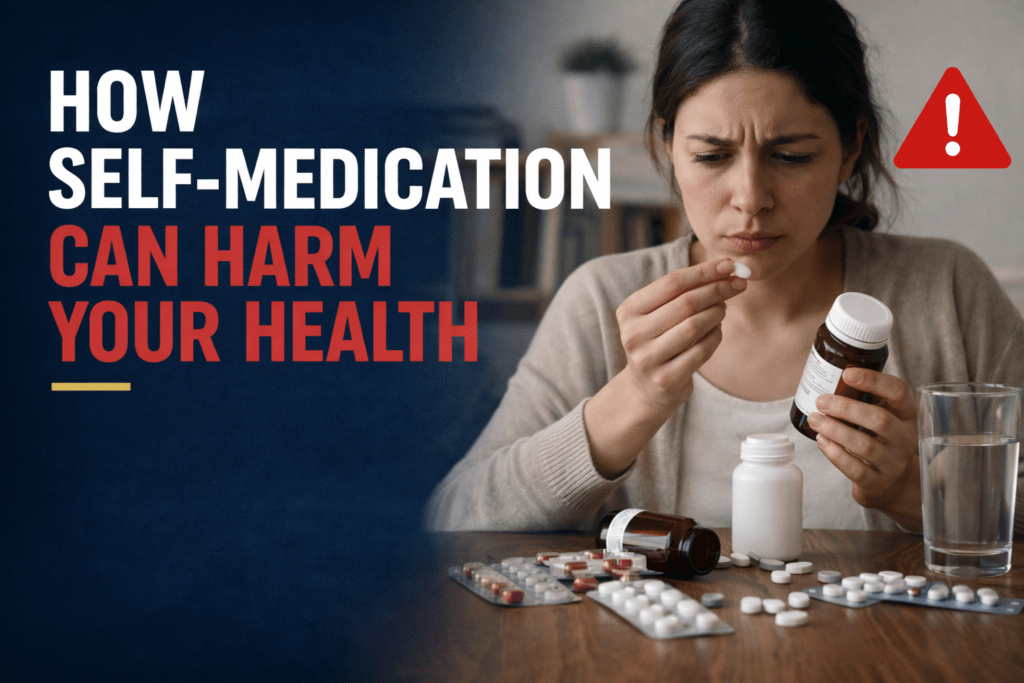

In today’s fast-paced world, many people turn to self-medication as a quick solution for common health problems. Whether it’s taking painkillers for a headache, antibiotics for a sore throat, or using leftover prescriptions without consulting a doctor, self-medication has become increasingly common. While it may seem convenient and cost-effective, this habit can pose serious risks to your health in the long run.
Self-medication refers to the practice of using drugs, herbs, or home remedies without professional medical advice. Although it can be acceptable in minor situations like treating a mild cold or occasional headache, frequent or improper use can lead to harmful consequences.
One of the biggest dangers of self-medication is the risk of misdiagnosis. Symptoms like fever, fatigue, or pain can be linked to multiple health conditions. Without proper medical evaluation, you might treat the symptom instead of the underlying disease. For example, recurring headaches might be dismissed as stress and treated with over-the-counter pills, while the actual cause could be something more serious that requires medical attention. Delaying proper diagnosis can worsen the condition and make treatment more complicated later.
Another major concern is incorrect dosage. Medicines work effectively only when taken in the right amount and at the right time. Taking too little may not cure the problem, while taking too much can lead to toxicity. Many people assume that over-the-counter drugs are completely safe, but excessive use can harm vital organs such as the liver and kidneys. Painkillers, for instance, when overused, can cause stomach ulcers or kidney damage over time.
Drug interactions are also a serious risk. If you are already taking prescribed medications for chronic conditions like diabetes, hypertension, or heart disease, adding other drugs without medical advice can lead to dangerous interactions. These interactions can reduce the effectiveness of your primary treatment or cause unexpected side effects. Without proper knowledge, it is difficult to predict how different drugs will react with each other in your body.
Antibiotic misuse is one of the most alarming consequences of self-medication. Many people take antibiotics without a prescription or stop taking them once they feel better. This behavior contributes to antibiotic resistance, a condition where bacteria become stronger and no longer respond to treatment. As a result, infections become harder to cure, requiring stronger medications and longer recovery periods. This is not just a personal risk but a global health concern.
Allergic reactions are another potential danger. Without proper testing or medical history evaluation, you may unknowingly take a medication that your body reacts negatively to. Allergies can range from mild skin rashes to severe conditions like difficulty breathing or anaphylaxis, which can be life-threatening if not treated immediately.
Self-medication can also lead to drug dependence or abuse. Certain medications, especially those used for pain relief, anxiety, or sleep disorders, can be habit-forming. Regular use without supervision increases the risk of addiction, making it difficult to stop even when the medication is no longer needed. This can have serious physical and psychological effects on a person’s well-being.
Another overlooked aspect is the masking of serious illnesses. Temporary relief from symptoms can create a false sense of recovery. For example, using cough syrups or fever reducers might make you feel better for a while, but the root cause of the illness may still be present. This delay in seeking professional care can allow the disease to progress silently.
It’s also important to consider the risks associated with using expired or improperly stored medications. Many people keep leftover medicines at home and use them later without checking their expiration dates. Expired drugs may lose their effectiveness or even become harmful. Additionally, improper storage can alter the chemical composition of medicines, making them unsafe to use.
Despite these risks, self-medication continues to rise due to easy access to drugs, online information, and a desire to save time and money. However, relying on unverified sources or internet advice can be misleading and dangerous. What works for one person may not be suitable for another, as each individual’s health condition and medical history are different.
To protect your health, it is important to adopt responsible practices. Always consult a qualified healthcare professional before starting any medication, especially if symptoms persist or worsen. Follow the prescribed dosage and duration strictly. Avoid sharing medications with others, even if their symptoms seem similar. Keep a record of any allergies or reactions you’ve experienced in the past and inform your doctor accordingly.
In conclusion, while self-medication may appear to be a convenient solution for minor health issues, its potential risks far outweigh the benefits. From misdiagnosis and drug interactions to antibiotic resistance and long-term health damage, the consequences can be severe. Prioritizing professional medical advice and using medications responsibly is the safest way to maintain your health and well-being.