
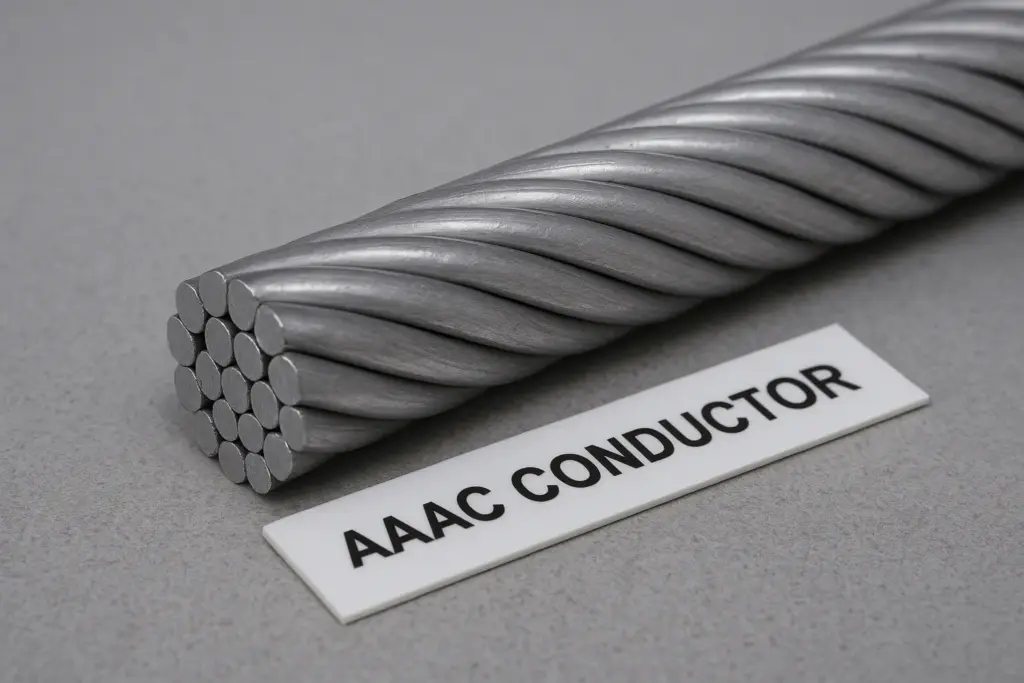

In the evolving world of power transmission, efficiency, reliability, and durability are critical. Among various overhead conductors, the AAAC conductor (All Aluminum Alloy Conductor) has emerged as a preferred choice for utilities and industrial projects worldwide. At HNBF Power, a global leader in overhead conductors and power cables, we specialize in providing high-quality AAAC conductors that meet stringent international standards while delivering superior performance.
What is an AAAC Conductor?
An AAAC conductor is a type of overhead conductor made entirely of aluminum alloy strands. Unlike traditional AAC (All Aluminum Conductor) conductors, AAAC combines lightweight properties with higher tensile strength. This makes it ideal for long-span transmission lines, where sag reduction and mechanical stability are crucial.
Key features of AAAC conductors include:
-
Lightweight and Strong: Offers higher strength-to-weight ratio compared to AAC, enabling longer spans and fewer towers.
-
Corrosion Resistance: Aluminum alloy provides excellent resistance against environmental factors such as humidity, pollution, and salt-laden air.
-
High Conductivity: Ensures efficient power transmission while minimizing line losses.
HNBF Power’s AAAC conductors are engineered to maintain consistent performance across diverse climates and challenging terrains, making them ideal for both urban and remote installations.
Advantages of Using AAAC Conductors
AAAC conductors offer several benefits over conventional AAC or ACSR conductors:
1. Enhanced Mechanical Strength
The aluminum alloy used in AAAC conductors significantly improves tensile strength, reducing the risk of line breakage under high loads or extreme weather conditions. This makes AAAC ideal for areas with strong winds or ice accumulation.
2. Reduced Line Sag
With higher mechanical stability and lower weight, AAAC conductors reduce the sag between towers, enabling more efficient transmission line design. This is particularly valuable in high-voltage and long-distance projects.
3. Long-Term Durability
Corrosion is a major concern for overhead conductors. AAAC’s aluminum alloy composition ensures superior resistance to atmospheric corrosion, thereby extending the life of transmission lines and lowering maintenance costs.
4. Cost-Effective Performance
Although AAAC conductors may have slightly higher upfront costs than AAC, their long-term reliability, reduced maintenance, and higher load capacity make them a cost-effective solution for modern power networks.
Applications of AAAC Conductors
AAAC conductors are widely used across various sectors, including:
-
High-Voltage Transmission Lines: Long-distance power delivery requiring minimal sag and high tensile strength.
-
Urban Distribution Networks: Lightweight conductors for compact, congested urban areas.
-
Industrial Projects: Factories, mining sites, and large-scale industrial setups benefit from AAAC’s durability and high conductivity.
HNBF Power ensures that our AAAC conductors meet international standards such as ASTM B-232, IEC, and relevant utility specifications, making them suitable for global applications.
Why Choose HNBF Power for AAAC Conductors?
At HNBF Power, we have decades of experience in manufacturing and supplying overhead conductors worldwide. Choosing us for AAAC conductors means:
-
Precision-engineered products with consistent quality.
-
Global compliance with ISO, ASTM, and IEC standards.
-
Customized solutions to meet project-specific requirements.
-
Dedicated technical support for engineers, procurement teams, and EPC contractors.
We understand the critical role conductors play in reliable power delivery, and our focus on quality ensures your transmission network performs efficiently for decades.
FAQs About AAAC Conductors
Q1: How does AAAC differ from AAC and ACSR?
AAAC is made from aluminum alloy strands, offering higher tensile strength and corrosion resistance than AAC. Unlike ACSR, it does not contain a steel core, making it lighter and more resistant to corrosion.
Q2: What are the typical applications of AAAC conductors?
AAAC is used in high-voltage transmission lines, urban distribution networks, and industrial power projects where mechanical strength, reduced sag, and corrosion resistance are crucial.
Q3: Are AAAC conductors cost-effective?
Yes, despite slightly higher upfront costs, AAAC conductors reduce maintenance and increase line longevity, offering excellent long-term value.
Q4: Can AAAC conductors be customized for specific projects?
Absolutely. HNBF Power provides custom diameters, stranding configurations, and alloy compositions to match project requirements.
Q5: How long do AAAC conductors last?
With proper installation and maintenance, AAAC conductors can last over 30 years, even in harsh environmental conditions.
Conclusion
For engineers and procurement professionals looking for a reliable, efficient, and long-lasting overhead conductor, the AAAC conductor stands out as a superior choice. At HNBF Power, we combine technical expertise with global manufacturing standards to deliver AAAC conductors that meet and exceed expectations.
Contact HNBF Power today to explore custom AAAC conductor solutions tailored to your project’s specifications and ensure the long-term efficiency and reliability of your power network.