

Introduction
Every construction project has gaps. Between window frames and walls, around pipe penetrations, inside cavity walls, and beneath roof sheets — these empty spaces may seem insignificant, but they cause real problems. Air leaks through them, wasting energy and increasing electricity bills. Sound travels through them, destroying privacy and peace. Moisture finds its way in, leading to mold, rot, and structural damage.
The solution is simple: fill the gaps. But not with just any material. What is needed is something that expands to fill every corner, adheres to surrounding surfaces, and provides lasting insulation. This is exactly what Soudafoam delivers.
Soudafoam is a one-component, moisture-curing, self-expanding polyurethane foam manufactured by Soudal. Available across Pakistan through Soudal Pakistan, it has become the standard choice for professionals who need reliable gap filling, thermal insulation, and acoustic sealing. This article provides a comprehensive look at Soudafoam based on its official technical data sheet.
What Makes Soudafoam Different?
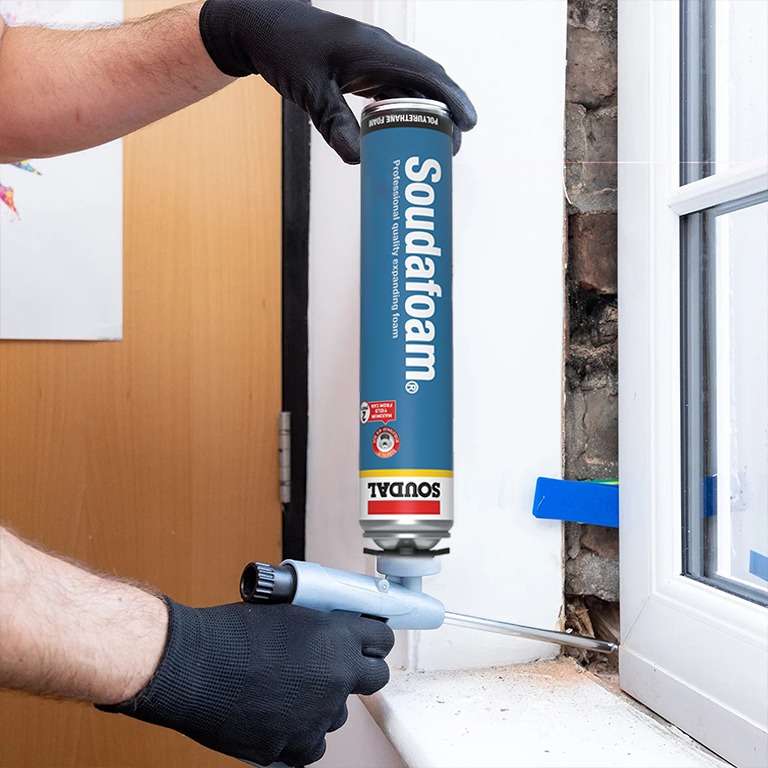
Unlike traditional gap-filling materials like mortar, putty, or fiberglass insulation, Soudafoam is designed specifically for irregular cavities and hard-to-reach spaces. It comes in a 750 ml aerosol can with a threaded adapter that attaches to a professional foam gun. When dispensed, it expands to fill the cavity completely, reaching areas that no other material could access.
The foam cures by reacting with moisture in the air. Within minutes, it transforms from a liquid to a solid foam with a fine, uniform cell structure. Once cured, it remains stable with no shrinkage and no unwanted post-expansion — two problems that plague cheaper foam products.
The Duravalve technology in every Soudafoam can ensures consistent performance throughout the product’s shelf life, even if the can has been stored or transported lying down. This reliability is why professionals trust Soudafoam for critical applications.
Temperature Performance
Soudafoam performs reliably across a wide temperature range. The cured product can withstand temperatures from -40°C to +90°C, covering everything from the coldest northern area winters to the hottest summer days on exposed roofs.
For application, the can temperature should be between 5°C and 30°C, while ambient and surface temperatures should range from 5°C to 35°C. Applying the foam outside these ranges can affect expansion rates and curing times.
Surface Preparation and Adhesion
Proper application of Soudafoam begins with surface preparation. Surfaces must be free from dust and grease. The technical data sheet emphasizes a critical step: moisten surfaces with a water sprayer before application. This moisture is essential for the curing reaction and improves foam adhesion.
For non-conventional substrates, a preliminary adhesion test is recommended. The foam adheres well to most common construction materials including wood, concrete, masonry, and metal. However, it will not adhere to polyethylene, polypropylene, or PTFE (Teflon).
For deep cavities requiring multiple layers, each layer should be moistened before applying the next. This ensures proper curing throughout the entire depth of the fill.
Application Method
Using Soudafoam requires a professional foam gun, which attaches to the threaded can valve. Before each use, the can must be shaken vigorously for at least 20 seconds to properly mix the propellant and foam components.
When filling holes and cavities, the general rule is to fill only two-thirds of the volume. The foam will expand to fill the remaining space. Overfilling can lead to excessive waste and messy cleanup.
During extended use, the can should be shaken regularly to maintain consistent foam quality. If working in layers, each layer requires fresh moistening before the next application.
Fresh, uncured foam can be cleaned using Soudal Gun & Foamcleaner. However, caution is advised as this cleaner may affect certain plastics, lacquers, or painted surfaces. A test on an inconspicuous area is recommended before widespread use. Once the foam has cured, it can only be removed mechanically by cutting, sanding, or scraping, or with Soudal PU Remover.
UV Sensitivity and Protection
One of the most important limitations of Soudafoam is its sensitivity to ultraviolet light. The cured foam is not UV-resistant, meaning prolonged exposure to direct sunlight will cause it to degrade, discolor, and eventually crumble.
For any outdoor application where the foam will be exposed to sunlight, protection is mandatory. The technical data sheet specifies three acceptable protection methods: overpainting with a suitable paint, sealing with a weatherproof sealant such as silicone, polyurethane, acrylic, or hybrid polymer, or covering with a physical barrier.
For window and door installations, the foam is typically covered by trim, cladding, or plaster, providing natural UV protection. For exposed applications like roof gaps or exterior wall cavities, proper protection must be applied.
Applications in Construction
Soudafoam serves multiple purposes across residential, commercial, and industrial construction. Cavity filling is perhaps the most common application — filling voids in walls, between studs, or behind cladding to improve insulation and prevent air movement.
Sealing openings in roof constructions is another major use. Around vents, pipes, skylights, and roof penetrations, the foam creates an airtight and water-resistant seal that prevents leaks and energy loss.
For acoustic applications, Soudafoam can be used to create sound baffles or fill gaps in party walls between apartments or offices. The 58 dB sound insulation rating makes a meaningful difference in noise transmission.
The foam is also excellent for improving thermal isolation in cooling systems, refrigeration units, and cold storage facilities where maintaining temperature is critical.
Pipe penetrations through walls and floors are another perfect application. The foam seals the annular space around pipes, preventing air leakage, pest entry, and moisture migration.
Health and Safety
Users should always wear gloves and goggles when working with Soudafoam. The product should only be used in well-ventilated areas. The packaging label and safety data sheet contain detailed safety information that should be reviewed before use.
Cured foam should never be burned away, as this releases toxic fumes. Mechanical removal is the only safe method for cured material. When vaporizing foam using a compressor or other equipment, additional security measures are required.
Environmental Considerations
Soudafoam is freon-free, meaning it does not harm the ozone layer or contribute to the greenhouse effect through its propellant. This makes it a more environmentally responsible choice compared to older foam products.
Frequently Asked Questions (FAQs)
Q1: What is the chemical base of Soudafoam?
A: Soudafoam is based on polyurethane, as stated in the technical data sheet.
Q2: How long does it take for the foam to form a skin?
A: Skin formation occurs within 10 minutes according to EN 17333–3 testing.
Q3: When can I cut the foam?
A: Cutting time is 25 minutes, meaning you can trim excess foam after this time.
Q4: Can I use Soudafoam around windows and doors?
A: Yes, this is one of the most common applications. Fill the gap between the frame and rough opening, but only fill two-thirds of the depth to allow for expansion.
Q5: Can Soudafoam be used outdoors?
A: Yes, but cured foam must be protected from UV exposure by painting, sealing, or covering. Without protection, sunlight will degrade the foam over time.
Conclusion
Soudafoam represents a significant advancement in gap filling and insulation technology. Its ability to expand into irregular cavities, adhere to common building materials, and provide both thermal and acoustic insulation makes it an indispensable tool for construction professionals.
The product’s stability after curing with less than 2 percent shrinkage and no post-expansion ensures that filled gaps remain properly sealed over the life of the building. While UV sensitivity requires protection for exposed applications, this is easily addressed with paint or sealant.
For contractors, installers, and maintenance professionals working with Soudal Pakistan, Soudafoam offers the reliability, performance, and ease of use that professional jobs demand. Proper surface preparation, correct application technique, and appropriate UV protection will ensure that this foam provides years of trouble-free service.
For more information, expert guidance, or to explore the complete range of Soudal products, feel free to contact PATSA Pakistan or visit: https://patsapakistan.com/patsa-products