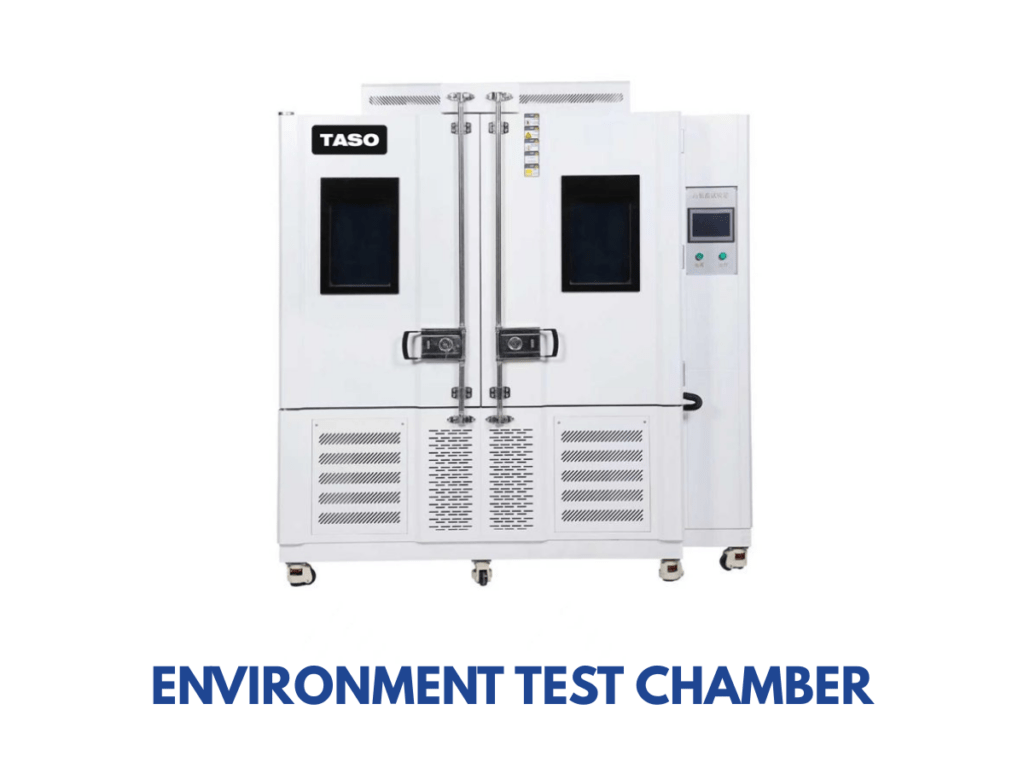

Reliability Under Pressure: Choosing the Right Environment Test Chamber for Modern Manufacturing
In the world of product development, “hope” is not a strategy. Whether you are developing the next generation of lithium-ion batteries for electric vehicles or specialized sensors for aerospace, you need to know exactly when and why your product will fail.
In the United States, where regulatory standards like UL, ASTM, and MIL-SPEC govern almost every industry, laboratory testing isn’t just a checkbox—it’s a competitive advantage. This is where the environment test chamber becomes the most important piece of equipment in your facility. By simulating years of environmental stress in just a few days, these chambers allow engineers to fix weaknesses before a product ever reaches a customer’s hands.
Key Features of a High-Performance Environment Test Chamber
When evaluating a new unit for your lab, the technical specifications must align with your long-term testing goals. Look for these essential features:
- Precision PID Control Systems: Advanced controllers ensure the chamber maintains a rock-solid temperature setpoint without “overshooting,” which is critical for repeatable data.
- Uniform Airflow Distribution: A high-quality chamber uses balanced fan systems to ensure the air at the top-left corner is the exact same temperature as the bottom-right.
- Multi-Pane Heated Viewing Windows: To prevent condensation and frost from blocking your view during extreme cold cycles, look for vacuum-insulated, heated glass.
- Reinforced Stainless Steel Interior: High-humidity testing is corrosive. An 18-gauge 304 or 316 stainless steel interior ensures your investment lasts for decades.
Primary Drivers for Environmental Testing Adoption
Why are US-based companies across the Midwest and Coastal tech hubs investing more heavily in the climate test chamber?
- Global Supply Chain Shifts: As components are sourced from new suppliers, engineers must verify that new materials can handle the diverse climates of North America.
- The Rise of Electronics: With circuitry becoming smaller and more powerful, “thermal soak” has become a leading cause of hardware failure in consumer and industrial goods.
- Liability and Safety Compliance: Proving that a product survived rigorous cycles in a temperature and humidity chamber provides a vital safety record and reduces insurance risks.
- Rapid Innovation Cycles: The pressure to get products to market faster means testing must be accelerated; a chamber does in 100 hours what nature does in 5 years.
The Critical Role in the Product Lifecycle
An environmental chamber isn’t just an “end-of-line” auditor; it serves a vital purpose at every stage:
- R&D Phase: Stress-testing prototypes to find the breaking point of new adhesives, plastics, or alloys before finalizing the design.
- Validation: Ensuring the final product meets specific “Mission Profiles” required by defense or medical contractors.
- Quality Audit: Pulling random samples from the production line to ensure that manufacturing consistency remains high over time.
- Failure Analysis: Re-creating field failures in a controlled setting to find solutions for customers as quickly as possible.
Solving the “Real World” Problem: Humidity and Temperature Fluctuations
The biggest challenge in environmental testing is stability. A cheap chamber might reach a target temperature, but if it “swings” by 2 or 3 degrees, your data becomes unreliable.
For many American industries, the temperature and humidity chamber must manage “latent heat”—the heat generated by the product itself (like a battery being charged). If your chamber doesn’t have the cooling capacity to offset the heat of the product under test, your results are invalid. Modern chambers solve this with high-capacity refrigeration systems and intelligent bypass valves that react in milliseconds to internal changes.
Why Advanced Climate Control is the New Industry Standard
1. Simulating the Extreme
A high-end climate test chamber can move from $+180$°C to $-70$°C in a matter of minutes. This “thermal shock” is essential for identifying micro-cracks in solder joints or delamination in composite materials that would otherwise take years to appear in the field.
2. Sophisticated Humidity Management
Humidity is notoriously difficult to control. Leading chambers use electronic humidity sensors and steam generators to maintain levels as low as 10% RH or as high as 98% RH. This is vital for the electronics industry, where “whiskering” and corrosion happen in the blink of an eye.
3. Remote Monitoring and Data Logging
In the modern US lab, engineers aren’t always standing in front of the machine. Today’s chambers offer Ethernet and Wi-Fi connectivity, allowing team members to monitor a 500-hour test from their smartphones and download ISO-compliant data logs directly to the cloud.
Key Applications Across the USA
- Renewable Energy: Testing solar inverters and battery packs for long-term outdoor exposure.
- Automotive: Subjecting dashboard plastics to high-heat “desert” simulations to check for off-gassing and warping.
- Defense: Ensuring communication gear works at high altitudes and extreme cold (MIL-STD-810H).
- Telecommunications: Verifying that 5G hardware can withstand the salt-fog and humidity of coastal installations.
Frequently Asked Questions (FAQs)
1. What is the difference between a reach-in and a walk-in environment test chamber?
Reach-in chambers are for smaller components and fit easily in a standard lab. Walk-in chambers are modular rooms used for large assemblies where technicians may need to enter the space to set up equipment.
2. Can I run a “dry” temperature test in a temperature and humidity chamber?
Yes. Most humidity-capable chambers allow you to turn the water system off and run purely as a high/low temperature oven or freezer, giving you maximum versatility for different test profiles.
3. How often should a climate test chamber be calibrated?
For most US-based manufacturing, annual calibration is the minimum requirement to stay compliant with ISO 9001. High-precision labs often calibrate every six months to ensure zero data drift.
Conclusion: Engineering Peace of Mind
At the end of the day, an environmental chamber is about confidence. It’s about knowing that when your product leaves the loading dock, it’s ready for whatever the world throws at it. US manufacturers are currently leading the way in innovation, but that innovation must be backed by rigorous, repeatable data.
If you are looking for a reliable partner to help equip your lab, TASO Metrology offers a comprehensive range of testing solutions. From the standard environment test chamber to specialized temperature and humidity chamber configurations, our equipment is built to meet the demanding precision required by today’s global industrial leaders.
Is your product ready for the real world?
Contact TASO Metrology Today for a technical consultation or a free quote, and let’s ensure your next project is built to last.