
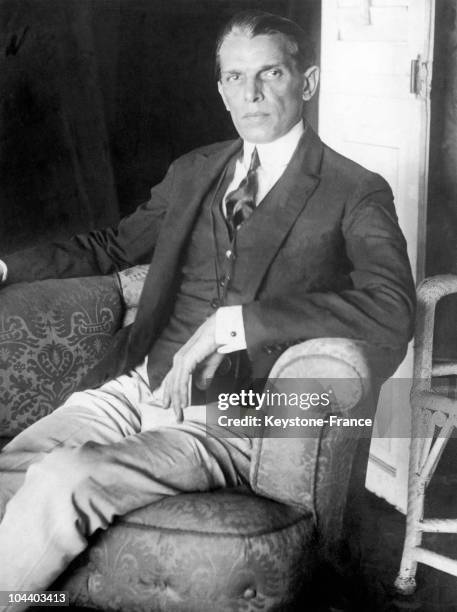

Quaid-e-Azam: The Battle Within and BeyondAbstract
Most of us have heard stories of Quaid-e-Azam Muhammad Ali Jinnah’s political struggles against the British Raj and the Indian National Congress. But very few know that while fighting for the creation of Pakistan, he was also engaged in a secret battle against a deadly illness: Tuberculosis (T.B.).
This article uncovers how Jinnah managed to keep this illness hidden, why this secrecy was crucial for the success of the Pakistan Movement, and how his unwavering determination shaped the destiny of millions.
1. The Early Symptoms
In 1937, after delivering an important address in Lucknow, Jinnah returned to Bombay exhausted and coughing severely. Known for his dislike of medical consultations, he initially avoided going to a doctor. However, when his condition didn’t improve, he finally had a checkup and was advised complete rest — advice he quietly ignored.
At this time, the Muslim League had no leader strong enough to replace him. If news of his illness leaked, it would weaken the movement. So Jinnah chose absolute secrecy, reducing public appearances and distancing himself from large gatherings to avoid any signs of weakness becoming public.
2. Efforts to Maintain Secrecy
To protect his privacy, Jinnah shifted from his small Bombay residence to a vast, secluded house in the Malabar Hills — now known as Jinnah House. The wide area and dense trees ensured no one could hear his coughing fits.
He also moved between this residence and another house on Aurangzeb Road in Delhi. Fatima Jinnah, who knew of his illness, constantly urged him to rest, but Jinnah refused, famously saying:
“Have you ever heard of a General take a holiday when his army is fighting for its survival?â€
With Pakistan’s creation nearing, his public duties increased. Long speeches drained him physically, yet he continued leading the Muslim League with unmatched commitment, never revealing the seriousness of his condition.
3. Political Pressure and the Lahore Resolution (1940)
By 1940, during the Lahore Resolution, Jinnah’s workload intensified even as his health declined.
In November, he traveled to Delhi for a crucial meeting, which worsened his illness. A doctor advised fifteen days of bed rest — but Jinnah returned to work after just two days.
In 1941, he even collapsed inside a train compartment due to exhaustion, but after a brief pause, he resumed his political mission. His goal was clear: reorganize the Muslim League and unite Muslims under one political voice.
4. The 1946 Elections and Medical Diagnosis
The 1946 elections brought a major victory: the Muslim League won all Muslim seats in the Central Assembly. But Jinnah’s health grew worse.
While staying in Simla, he suffered another severe coughing fit. Fatima Jinnah convinced him to travel to Bombay to see the renowned Dr. Patel. His condition was so fragile that the train stopped before Grant Road Station to prevent public exposure. Dr. Patel rushed him to a nearby hospital immediately.
5. The X-Ray Report: The Hidden Truth
In June 1946, Dr. Patel conducted an X-ray of Jinnah’s chest. The results were devastating — his lungs had multiple holes, and the healthy portions were rapidly deteriorating.
According to Freedom at Midnight:
“He did not have more than one or two years to live unless he reduced his workload and rested.â€
But Jinnah refused to slow down. He agreed only to the minimum level of rest that wouldn’t affect his responsibilities.
Most importantly, he ordered Dr. Patel not to reveal his diagnosis to anyone — not even Fatima Jinnah.
To help him function, Dr. Patel administered injections every two weeks, enabling him to attend political sessions and meetings with apparent strength.
6. Jinnah’s Unshakeable Resolve
Despite British and Congress leaders offering political compromises — including the possibility of Jinnah becoming Prime Minister of a united India — he refused. He believed a united India would never protect Muslim political identity.
Mountbatten later admitted that if he had known Jinnah didn’t have long to live, he would never have allowed the creation of Pakistan.
Even British intelligence failed to uncover the truth. To the world, Jinnah appeared old but healthy enough. Only he and Dr. Patel knew how little time he had.
Without Jinnah’s persistence, the Muslim leadership might have fractured, and Pakistan’s creation could have become impossible.
Finally, on June 3, 1947, Britain announced the partition plan, and Pakistan emerged as an independent state on 14 August 1947.
7. Conclusion
Pakistan’s creation was not only a result of political struggle — it was also a race against time. Jinnah sacrificed his own life, choosing duty over health. Dr. Patel upheld professional ethics by protecting Jinnah’s secret, enabling him to lead the Muslim nation until independence.
Jinnah’s hidden battle is often overlooked in textbooks, but it holds powerful lessons. His resilience should inspire today’s youth to work fearlessly for their nation, just as he did — even while fighting a deadly disease.
References
Fatima Jinnah. (1987). My Brother. Quaid-i-Azam Academy.
Lapierre, D., & Collins, L. (1975). Freedom at Midnight. Harper & Row.
Author Bio
Muhammad Bilal is a 3rd-semester Software Engineering student at UET Taxila. While his academic background revolves around programming and technology, he has a deep passion for Pakistan’s history.
During his Pakistan Studies coursework, he discovered the lesser-known details of Quaid-e-Azam’s secret illness during the final years of the Pakistan Movement. This inspired him to research and write about Jinnah’s two simultaneous battles — one against political opposition and the other against tuberculosis — using credible sources such as My Brother and Freedom at Midnight.
Through this article, he aims to highlight the extraordinary courage that shaped the creation of Pakistan.Connect with him on Facebook
https://web.facebook.com/profile.php?id=61562856010080



This demonstrates a masterful grasp of the relevant literature.
This demonstrates a masterful grasp of the relevant literature.