
Introduction
Rust is the slow decay of metal — and in Pakistan’s varied climate, it’s an expensive problem. From coastal humidity in Karachi to industrial chemicals in Lahore, from monsoon rains to condensation in cold storage, corrosion attacks metal structures relentlessly.
Traditional paints provide barrier protection they keep oxygen and moisture away from metal. But if the paint scratches, rust starts immediately.
Zinc Spray by Soudal offers something fundamentally different: cathodic (galvanic) protection. It doesn’t just cover the metal — it actively protects it, even when scratched.
What is Soudal Zinc Spray?
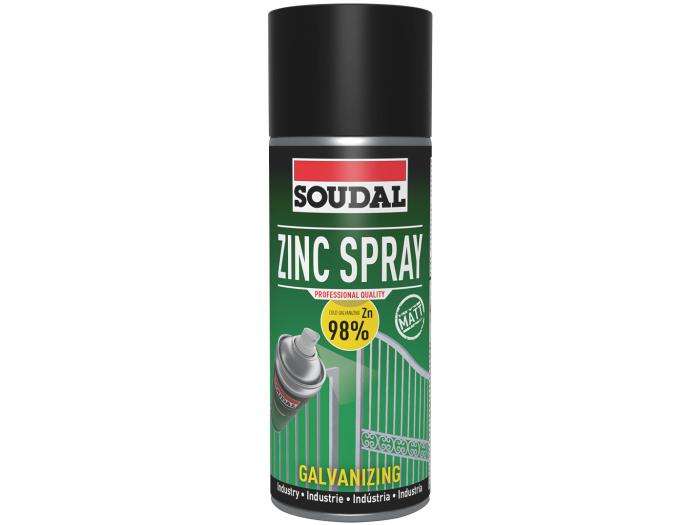
Soudal Zinc Spray is a high-grade zinc aerosol coating containing 98% pure zinc in a sprayable compound with epoxy-ester binder. It’s essentially spray-on galvanizing — providing the same electrochemical protection as hot-dip galvanizing, but in a convenient 400 ml can.
Available through Soudal Pakistan, it’s the professional’s choice for:
· Repairing damaged galvanized coatings
· Protecting weld seams and joints
· Corrosion protection for steel structures
· Automotive underbody protection
· Marine and coastal applications
Key Features That Matter
1. True Galvanizing Action
With 98% zinc, Soudal Zinc Spray meets the requirements of ASTM A780–93 — the standard for repair of damaged hot-dip galvanized coatings. This means:
· Professional-grade protection
· Meets industry standards
· Suitable for specification work
· Trusted by engineers
2. Weldable Coating
The dried coating is suitable for spot welding — a critical feature for:
· Automotive body repair
· Sheet metal fabrication
· Assembly line welding
· Repair of welded assemblies
3. Electrical Conductivity
As a metal-rich coating, it’s a good electrical conductor, making it suitable for:
· Grounding connections
· Electrical enclosures
· EMI shielding applications
· Conductive pathways
4. Mechanical Resistance
The epoxy-ester binder provides:
· Good shock resistance
· Abrasion resistance
· Erosion protection
· Durability in service
5. High Temperature Resistance
Withstands temperatures up to 350°C, making it suitable for:
· Exhaust systems
· Engine components
· Industrial equipment
· High-heat applications
Primary Applications in Pakistan
Automotive Industry
· Underbody protection: Chassis, frame rails, suspension components
· Weld repair: Protecting welded areas on body panels
· Exhaust systems: Heat-resistant protection
· Classic car restoration: Authentic galvanized finish
· Commercial vehicles: Truck and bus chassis protection
Industrial Maintenance
· Structural steel: Protecting beams, columns, trusses
· Pipework: Corrosion protection for pipelines
· Storage tanks: External coating for tanks
· Machinery: Protecting bases and frames
· Walkways and platforms: Slip-resistant?
Marine and Coastal
· Boat trailers: Corrosion protection from salt water
· Dock hardware: Cleats, winches, fittings
· Coastal structures: Railings, ladders, platforms
· Shipboard repairs: Touch-up of damaged coatings
Construction and Infrastructure
· Gutter braces: Protecting brackets and supports
· Weld joints: On-site protection after welding
· Reinforcement bars: Touch-up after cutting
· Steel railings: Long-term corrosion protection
· Roofing components: Protecting fixings and flashings
Repair and Maintenance
· Damaged galvanizing: Touch-up of hot-dip coatings
· Scratched painted steel: Undercoat for rust prevention
· New welds: Immediate protection after welding
· Cut edges: Protection where shearing exposes bare steel
Application Best Practices
Step 1: Surface Preparation
The TDS emphasizes: “Remove rust” and ensure surface is “clean, dry, free of dust and grease.”
Proper preparation:
· Remove all loose rust with wire brush, sanding, or grinding
· Remove old paint that’s failing
· Degrease with appropriate solvent
· Ensure surface is completely dry
· For best results, abrasive blasting to near-white metal
Step 2: Shaking
Shake can thoroughly before use and before applying each layer. The heavy zinc particles settle quickly inadequate shaking means uneven zinc content.
Step 3: Application
· Hold can approximately 20 cm from surface
· Apply in two layers minimum
· First layer: light, even coat
· Second layer: apply after minimum 2 hours
· Maintain wet edge to avoid lap marks
Step 4: Drying and Curing
· Dust dry: 10–15 minutes
· Tack-free: 20–30 minutes
· Recoat window: After 2 hours minimum
· Fully cured: 24 hours
· Topcoat: Apply after 24 hours if needed
Step 5: Post-Application
After use, spray aerosol upside down for 3 seconds to clean valve and prevent clogging with zinc residues.
Layer Requirements: Why Two Coats?
The TDS specifies: “Apply the zinc spray always in 2 layers.”
Why two layers?
1. Pin-hole free coverage: First coat may have microscopic gaps
2. Uniform zinc distribution: Second coat ensures even protection
3. Achieve specified film thickness: Single coat may be too thin
4. Meet standards: ASTM requirements typically specify minimum DFT
Frequently Asked Questions (FAQs)
Q1: Can Zinc Spray be painted over?
Yes! After 24 hours curing, Zinc Spray can be over-coated with:
· Automotive paints
· Industrial enamels
· Epoxy coatings
· Polyurethanes
Q2: What is the coverage area?
One 400 ml can covers approximately 1.5 square meters when applied in two coats. Coverage varies with:
· Surface profile/roughness
· Application technique
· Film thickness
· Zinc content
Q3: Can it be used on already rusted surfaces?
Loose rust must be removed. The TDS specifies “remove rust” before application. Zinc Spray protects metal — it doesn’t convert rust. For rusted surfaces:
1. Remove all loose rust mechanically
2. Apply Zinc Spray to clean metal
3. For light rust staining, consider rust converter first
Q4: How long does protection last?
Depends on:
· Environment: Coastal/industrial vs. interior
· Film thickness: Two coats last longer than one
· Mechanical wear: Abrasion reduces life
· Top coating: Painted topcoat extends life
Q5: How should Zinc Spray be stored?
Store unopened cans:
· In cool, dry environment (+5°C to +25°C)
· Away from direct sunlight
· Away from heat sources
· Upright preferred
· Shelf life: 3 years
Conclusion
Soudal Zinc Spray isn’t just another aerosol — it’s a sophisticated corrosion protection system in a can. Whether you’re protecting a massive steel structure, repairing automotive damage, or maintaining coastal equipment, it delivers genuine cathodic protection that ordinary paints can’t match.
For Pakistani industries fighting the constant battle against rust, Soudal Zinc Spray is an essential weapon.
Call to Action
Ready to experience true cathodic protection?
Contact PATSA Pakistan:
· Find Zinc Spray at your local dealer
· Get bulk pricing for industrial projects
· Request technical specifications and MSDS
· Ask about our complete metal protection range
PATSA Pakistan — Protecting Metal, Preserving Value.