
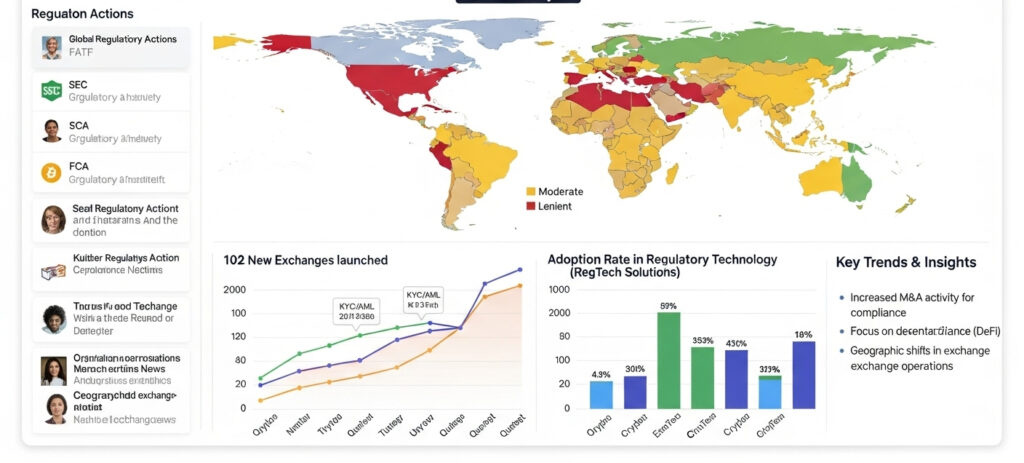

As digital assets continue expanding across global markets, the regulatory landscape surrounding cryptocurrencies has become one of the most influential factors shaping how trading platforms operate. Governments, financial authorities, and international agencies have started implementing strict compliance frameworks to regulate the trading, custody, taxation, and transaction monitoring of crypto assets.
These regulations varying significantly across regions directly impact crypto exchange development, influencing technological architecture, operational strategies, user onboarding flows, liquidity practices, and security implementation.
Understanding these regulations is essential for any organization planning to build or scale a trading platform. Whether deploying a centralized exchange, a hybrid model, or a multi-chain trading ecosystem, businesses must understand how global regulatory expectations shape infrastructure, compliance tools, data policies, and product features.
1. Why Regulation Is Becoming Central to Exchange Development
Crypto exchanges have grown from niche trading hubs into global financial platforms. With billions of dollars exchanged daily, regulators are increasingly involved to ensure consumer protection, prevent financial crimes, and promote responsible market behavior.
This is why regulatory strategy has become a foundational part of crypto exchange development. Compliance directly affects the architecture, user flows, data privacy mechanisms, and reporting systems of any trading platform.
Key global regulatory drivers include:
Growing institutional participation
Expanding cross-border trading activities
High-profile exchange hacks or collapses
AML and counter-terrorism financing obligations
Consumer protection and data security
Tax enforcement and reporting accuracy
A crypto exchange development company must design platforms that can adapt to evolving laws while maintaining security, speed, and market accessibility.
2. The Regulatory Frameworks That Shape Exchange Development
Each region approaches cryptocurrency governance differently. These differences influence how platforms structure user verification, transaction monitoring, wallet operations, and licensing models.
United States
The U.S. has a complex structure involving:
SEC for securities tokens
CFTC for derivatives and commodity-related assets
FinCEN for AML/CTF requirements
State-level licensing such as the New York BitLicense
These rules require extensive KYC/AML systems, transaction monitoring tools, user risk scoring, and secure data retention core components addressed during cryptocurrency exchange software development.
European Union
The EU introduced MiCA (Markets in Crypto-Assets Regulation), which focuses on:
Licensing for crypto asset service providers
Consumer safeguards
Transparency and operational requirements
Stablecoin issuance frameworks
MiCA influences wallet design, custody operations, and exchange governance rules.
United Kingdom
The FCA mandates:
Strict AML registration
Transaction risk monitoring
Custody segregation standards
This affects how crypto exchange development services integrate compliance analytics and monitoring modules.
Asia-Pacific Regions
Regulations vary widely:
Japan requires exchange registration and strict custody standards
Singapore offers licensing through its Payment Services Act
South Korea mandates real-name bank account integration
India fluctuates with tax policies and evolving compliance norms
Such diversity means platforms targeting Asia require adaptable compliance frameworks.
Middle East
Countries like the UAE and Bahrain provide clear licensing structures through their financial authorities, promoting innovation while enforcing robust compliance.
Latin America & Africa
Many regions are developing new frameworks, often centered around:
Taxation
AML controls
Stablecoin policies
These emerging markets create new opportunities but demand flexible exchange systems.
Across all jurisdictions, crypto exchange platform development must incorporate customizable compliance logic to ensure long-term operational viability.
3. Impact of Regulations on Exchange Architecture
Regulations significantly influence technical development decisions, particularly around data flows, identity verification, reporting, and auditing.
Key architectural impacts include:
KYC and Identity Verification
Platforms must integrate:
Document verification systems
Biometric authentication options
User risk scoring models
Automated onboarding decision engines
These tools affect frontend UX, backend automation, and database structure.
AML Monitoring
Real-time monitoring is essential for:
Detecting suspicious transaction patterns
Flagging high-risk addresses
Enforcing withdrawal limits
Blocking risky trading behavior
AML logic becomes a central component in cryptocurrency exchange software development.
Data Storage and Privacy
Regulations like GDPR enforce:
Encrypted data storage
Data minimization
User data deletion workflows
Transparent data use policies
This shapes the entire backend architecture.
Licensing Requirements
Some jurisdictions require:
Operational segregation
Clear governance policies
Capital adequacy
Insurance for user assets
These requirements influence wallet infrastructure and operational planning.
4. Security Standards Driven by Global Regulations
Security expectations have increased significantly across global regulatory bodies. As a result, security architecture has become a critical component of crypto exchange development.
Common regulatory-driven security standards include:
Multi-signature custody systems
Cold storage requirements for a portion of user funds
Penetration and vulnerability testing
Transaction risk scoring
Anti-DDoS infrastructure
Hardware-based security modules
A crypto exchange development company integrates these standards to reduce the risk of breaches and strengthen user trust.
5. How Regulations Shape Liquidity and Market Operations
Liquidity management is deeply influenced by regional rules. Regulations determine how platforms can:
Access liquidity providers
Offer trading derivatives
Provide leverage or margin trading
Support stablecoins or security tokens
Permit cross-border transactions
For instance:
The U.S. has strict rules for derivatives trading
The EU’s MiCA affects stablecoin liquidity
Asian markets may require local banking partnerships
These requirements guide trading engine logic, market-making strategies, and liquidity aggregation in crypto exchange development services.
6. Wallet and Custody Regulations
Wallet infrastructure requirements differ across jurisdictions and significantly influence crypto exchange platform development.
Key regulatory expectations include:
Segregated custody of user assets
Audited reserve proof
Clear hot and cold wallet allocation policies
Withdrawal risk scoring
On-chain transaction monitoring
Many regions require exchanges to maintain robust incident response procedures and transparent custody practices, further shaping wallet architecture.
7. Licensing and Jurisdiction Selection for Exchange Operators
Choosing the right jurisdiction affects:
Tax obligations
Banking partnerships
User trust and global reach
Operational cost
Required certifications
Common jurisdictions for licensing include:
UAE
Singapore
Estonia
Lithuania
United States (state-based)
United Kingdom
Japan
Australia
Businesses must align licensing decisions with platform functionality, long-term expansion plans, and targeted user groups.
8. Compliance Automation as a Trending Development Requirement
As regulations become more complex, automation is emerging as a major trend in crypto exchange development.
Modern platforms integrate automated systems for:
Real-time identity verification
Transaction monitoring
Reporting and data collection
Compliance alerts
Wallet risk scoring
Behavioral analytics
These tools reduce the operational burden of manual compliance and ensure consistency during rapid scaling.
9. How Regulatory Evolution Influences Innovation
While regulation can create challenges, it also encourages innovation. Developers are now creating:
More transparent trading engines
Multi-chain compliance-ready wallet systems
On-chain analytics tools
Advanced AML machine learning models
Modular compliance frameworks
These trends are shaping the future of cryptocurrency exchange software development by improving safety, usability, and global compatibility.
10. The Future of Regulation and Its Influence on Exchange Development
Global regulatory frameworks will continue evolving, pushing exchanges to adopt:
More standardized compliance systems
Real-time blockchain forensics tools
Enhanced KYC verification technologies
Stronger transparency and audit features
Greater accountability for custody operations
Interoperable regulatory reporting APIs
Crypto exchange development will increasingly revolve around building platforms that are adaptable, compliant, scalable, and secure.
Conclusion
Global cryptocurrency regulations have transformed the way trading platforms are designed, built, and operated. From user verification to transaction monitoring, wallet architecture to liquidity management, regulations influence every layer of crypto exchange development. A business entering this field must understand jurisdictional differences, long-term compliance expectations, and the evolving landscape of crypto governance.
Whether working internally or with a specialized crypto exchange development company, businesses must treat regulations as a core design principle rather than an afterthought. Effective cryptocurrency exchange software development now depends on integrating compliance-ready frameworks, secure infrastructure systems, scalable trading logic, and continuous monitoring tools.
Regulation will remain one of the most powerful forces shaping crypto exchange development services. Organizations that build adaptable, compliant, and secure platforms will be better positioned to thrive in the global digital asset economy.