

Introduction
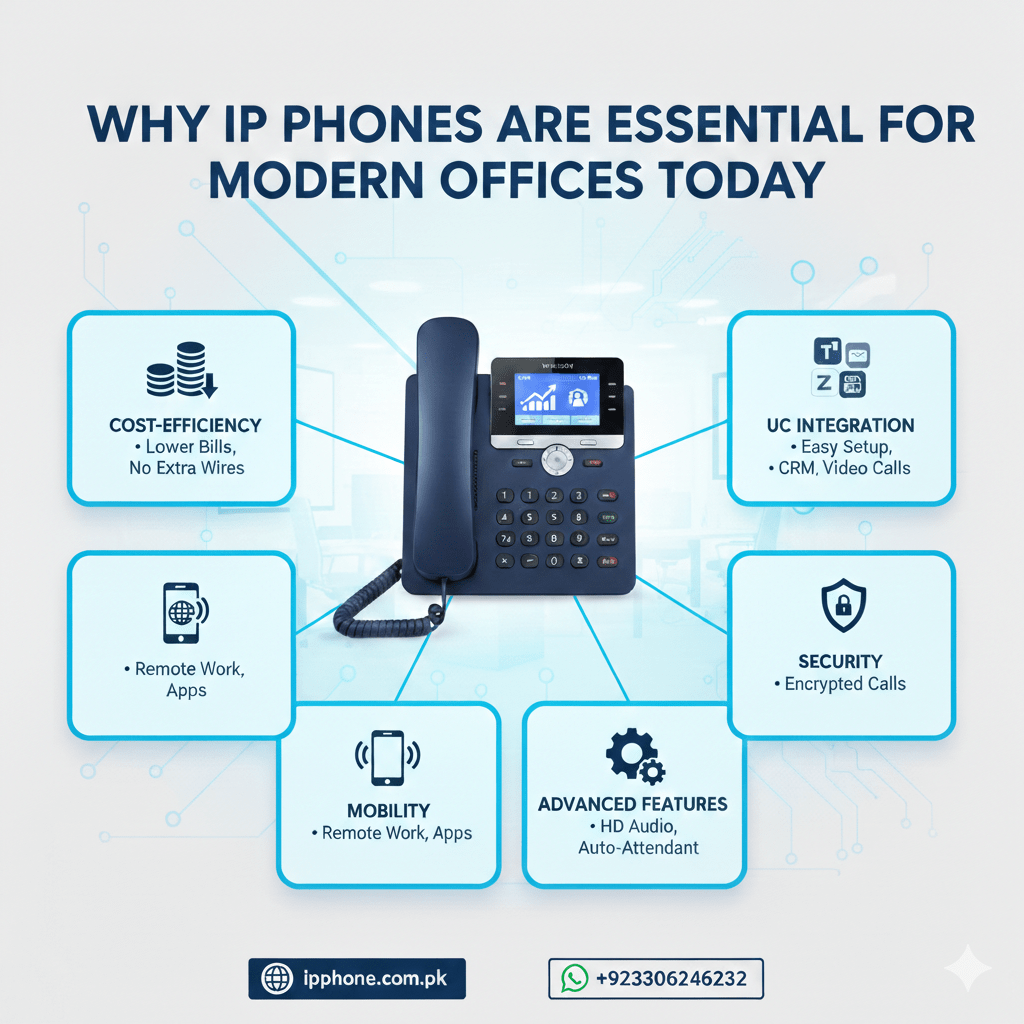
In the fast-paced digital era, traditional analog phone systems are no longer just “old”—they are a bottleneck to business growth. As companies transition toward digital transformation, communication remains the backbone of success. This is precisely why IP Phones Are Essential for Modern Offices today. They are no longer mere hardware on a desk, they are sophisticated endpoints that drive efficiency, collaboration, and professional branding.
What Are IP Phones?
IP phones, also known as VoIP (Voice over Internet Protocol) phones, transmit voice calls over the internet instead of traditional telephone lines. This allows offices to:
-
Reduce long-distance call costs
-
Integrate seamlessly with software like Microsoft Teams, Zoom, or Slack
-
Access advanced features such as video calling, call forwarding, and voicemail-to-email
-
Support remote work with soft phones or mobile apps
1. Drastic Cost-Efficiency and Reduced Overheads
One of the most immediate impacts of switching to VoIP office phones is the reduction in operational costs. Traditional PBX systems require expensive hardware installations and separate copper wiring for every desk.
-
Unified Infrastructure: IP phones utilize your existing internet connection (LAN/Wi-Fi), eliminating the need for separate phone lines.
-
Cheap Long-Distance: Because calls travel over the internet, international and long-distance rates are significantly lower, often even free between office branches.
-
Lower Maintenance: Cloud-based systems mean you don’t need an on-site technician to fix hardware issues constantly.
2. Unmatched Scalability for Growing Businesses
Modern offices are dynamic. Whether you are a startup adding your first five employees or an enterprise opening a new branch, modern office technology must keep pace.
-
Plug-and-Play Setup: Adding a new user is as simple as plugging an IP phone into an Ethernet port.
-
Virtual Expansion: Unlike analog systems that have a fixed number of ports, IP systems allow you to add hundreds of extensions without heavy infrastructure upgrades.
3. Seamless Integration with Unified Communications (UC)
The modern workplace thrives on business communication that goes beyond voice. IP phones serve as the hub for your entire digital ecosystem.
-
CRM Integration: When a client calls, their profile automatically pops up on the employee’s computer screen, allowing for personalized service.
-
Presence Status: Employees can see who is “available,” “busy,” or “away” before transferring a call, reducing customer wait times.
-
Video and Collaboration: Many high-end IP phones support direct video conferencing and screen sharing, bridging the gap between physical and virtual meetings.
4. Supporting Mobility and the Hybrid Workforce
The “office” is no longer a fixed location. With the rise of remote and hybrid work models, IP phones provide the flexibility that traditional systems lack.
-
Hot Desking: Employees can log into any IP phone in the office and have their personal extension and settings immediately available.
-
Mobile Apps: Most VoIP systems offer mobile applications, allowing staff to take office calls on their smartphones while maintaining a professional office number.
5. Advanced Features That Boost Productivity
IP phones come packed with features that were once considered “luxury” but are now standard requirements:
-
Auto-Attendant: A virtual receptionist to direct calls efficiently.
-
Voicemail-to-Email: Receive voice messages as audio files in your inbox, ensuring you never miss a lead.
-
HD Audio: Wide band audio technology ensures crystal-clear clarity, even in busy or noisy environments.
Comparison: IP Phones vs. Traditional Phone Systems
| Feature | IP Phones (VoIP) | Traditional Analog Systems |
| Connectivity | Internet-based (Broadband) | Physical Copper Lines |
| Initial Investment | Low (Minimal hardware) | High (Complex PBX boxes) |
| Feature Set | Video, CRM Sync, Mobile Apps | Basic Voice, Transfer, Hold |
| Work Location | Anywhere with Internet | Fixed to the Desk |
| Sound Quality | High Definition (HD) | Standard Analog Quality |
Top IP Phone Brands for Modern Offices
To ensure the best experience, it is vital to choose hardware from reputable manufacturers. Popular choices include:
Tips on Choosing VoIP IP Phone for Your Office
Compatibility
Make sure it supports SIP and works with your current VoIP or PBX system.
Audio Quality
Look for HD voice and noise reduction for clear calls.
Number of Lines
Select a phone that multiple lines for your daily workload.
Features Needed
Check for call hold, transfer, conference, BLF, and speed dial options.
Display & Buttons
A clear screen and programmable keys improve usability.
PoE Support
Power over Ethernet reduces extra wiring and power adapters.
Connectivity Options
Some models offer Wi-Fi or Bluetooth for flexibility.
Security
Ensure it supports encrypted calls and secure firmware updates.
Budget
Balance price with features and long-term reliability.
Why IP Phones Are Now a Necessity
The evidence is clear IP Phones Are Essential for Modern Offices today. They provide the cost savings, flexibility, and advanced features required to stay competitive in 2026. Transitioning to an IP-based system is no longer an “option”, it is a strategic move to future-proof your business.
Don’t let outdated technology hold your team back. Modernize your office today with the latest VoIP solutions.
FAQs
Q1: Can I use my existing internet connection for IP phones?
A. Yes, IP phones are designed to work seamlessly over your current high-speed internet or office LAN without needing separate phone lines.
Q2: Will I lose my current phone number if I switch to an IP system?
A. No, you can easily port your existing business numbers to a VoIP service provider, ensuring no disruption to your client communication.
Q3: Do IP phones work during a power outage?
A. IP phones require power via PoE or an adapter, so they stay active if your network switch is connected to a UPS or backup power source.
Contact Us for any details at:
for more click here