

Learn What Is Technical SEO and How Does It Improve Website Health
In the ever-evolving world of digital marketing, having a visually appealing website and quality content is no longer enough. Search engines like Google evaluate websites not only for content relevance but also for their technical health. This is where Technical SEO comes into play. Technical SEO ensures that your website meets the technical requirements of modern search engines, improving organic rankings, user experience, and overall website health.
Technical SEO focuses on the backend structure of your website, making it easier for search engines to crawl, index, and understand your content. While many business owners prioritize on-page and off-page SEO strategies, neglecting technical SEO can prevent even the best content from ranking effectively.
In this blog, we will explore what technical SEO is, why it’s crucial for website health, and how implementing it can benefit your business online.
What Is Technical SEO?
Technical SEO refers to optimizing a website’s infrastructure to help search engines crawl, index, and rank it efficiently. Unlike content SEO, which focuses on keywords and content quality, technical SEO deals with the website’s architecture, speed, security, and performance.
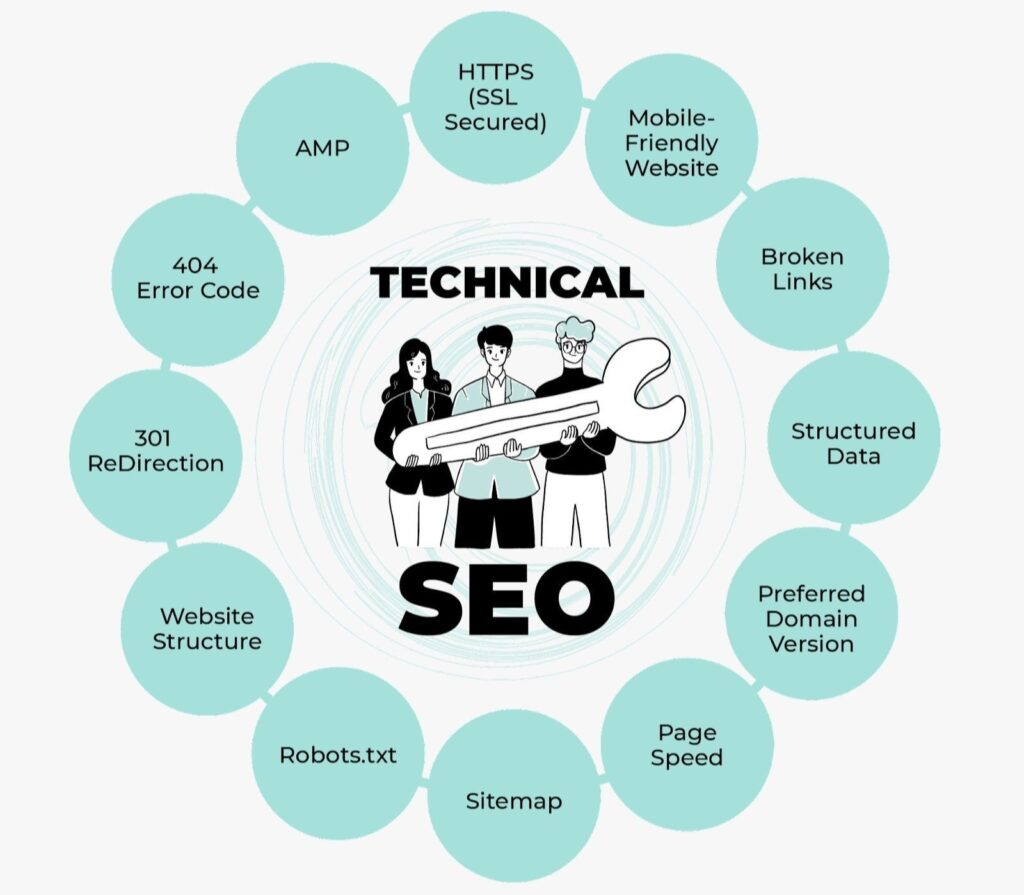
Key aspects of technical SEO include:
- Website Crawlability: Ensuring search engine bots can easily access and understand your site pages.
- Indexing: Making sure all important pages are indexed and unnecessary or duplicate pages are excluded.
- Site Speed: Optimizing loading times for better user experience and higher search rankings.
- Mobile Optimization: Ensuring the website works seamlessly on all devices.
- HTTPS Security: Protecting your site with SSL certificates to boost trust and SEO.
- Structured Data and Schema Markup: Helping search engines interpret your content for rich results.
Technical SEO is the foundation upon which other SEO strategies, such as content and link building, can perform effectively. Without it, even high-quality content may not reach its full potential in search rankings.
Why Technical SEO Is Important for Website Health
Website health is a measure of how efficiently your site operates from both user and search engine perspectives. A technically optimized website provides a smooth experience for visitors, reduces errors, and improves search engine rankings.
Here’s how technical SEO enhances website health:
1. Improved Crawlability and Indexing
Search engine bots need to crawl your website to understand its content and relevance. Technical SEO ensures proper XML sitemaps, robots.txt files, and site architecture so that bots can navigate your pages without obstacles. Proper indexing ensures that your important pages appear in search results while duplicate or irrelevant content is excluded.
2. Faster Page Loading Speed
Website speed is a critical factor for both user experience and SEO rankings. Slow websites lead to higher bounce rates, reduced engagement, and lost revenue. Technical SEO optimizes images, reduces unnecessary scripts, enables browser caching, and uses efficient coding practices to enhance loading times.
3. Mobile-Friendly Experience
With the majority of web traffic coming from mobile devices, mobile optimization is essential. Technical SEO ensures responsive design, fast mobile loading, and usability across devices, improving rankings and visitor retention.
4. Enhanced Website Security
HTTPS is a ranking factor and also instills trust in users. Technical SEO involves securing your site with SSL certificates, protecting sensitive data, and ensuring safe browsing for visitors.
5. Reduced Errors and Broken Links
Websites often accumulate broken links, redirect loops, and 404 errors, which negatively impact SEO and user experience. Regular technical SEO audits identify and fix these issues, keeping your site healthy and fully functional.
6. Structured Data and Rich Results
Adding schema markup and structured data helps search engines understand the context of your content. This can lead to enhanced SERP features like rich snippets, knowledge panels, and FAQs, driving more visibility and clicks.
7. Better User Experience
Ultimately, technical SEO improves the overall user experience. Smooth navigation, fast-loading pages, secure browsing, and clear site structure keep visitors engaged and encourage conversions.
Common Technical SEO Elements
Here are the essential components that every website should consider:
- XML Sitemap: Guides search engines to all important pages.
- Robots.txt File: Tells search engines which pages to crawl or ignore.
- Canonical Tags: Prevents duplicate content issues.
- 301 Redirects: Safely redirect old or broken URLs to new ones.
- HTTPS Protocol: Secures the website and improves trust.
- Mobile-Friendly Design: Ensures accessibility on all devices.
- Page Speed Optimization: Reduces load times to improve engagement.
- Structured Data: Adds context for search engines.
Benefits of Implementing Technical SEO
- Higher Rankings: Websites with strong technical SEO are easier for search engines to crawl and rank.
- Increased Organic Traffic: Optimized websites attract more relevant visitors from search results.
- Lower Bounce Rates: Fast, secure, and easy-to-navigate websites keep users engaged.
- Enhanced Conversions: Better UX leads to higher leads, sign-ups, and sales.
- Long-Term Stability: Technical SEO lays a foundation that supports other marketing strategies effectively.
How to Perform a Technical SEO Audit
A technical SEO audit identifies issues and provides a roadmap for optimization. Key steps include:
- Check Crawl Errors: Use Google Search Console to identify crawl issues.
- Evaluate Site Speed: Tools like PageSpeed Insights or GTmetrix provide recommendations.
- Analyze Mobile Usability: Test responsive design and mobile page speed.
- Inspect HTTPS Security: Ensure all pages are secure with SSL.
- Check for Broken Links: Fix 404 errors and redirect loops.
- Assess Structured Data: Ensure schema markup is implemented correctly.
- Review XML Sitemap and Robots.txt: Make sure all critical pages are accessible to search engines.
Why Businesses Should Invest in Technical SEO
Even if your content and backlinks are strong, poor technical SEO can prevent your site from performing well. Investing in technical SEO:
- Ensures your site is easily understood by search engines.
- Provides a seamless experience for visitors.
- Supports other marketing efforts like content marketing and social media campaigns.
- Helps your business stay competitive in the long term.
For businesses aiming for measurable growth, partnering with a professional SEO team can ensure that technical SEO is implemented correctly, optimized continuously, and aligned with your overall business goals.
FAQs (Frequently Asked Questions)
1. What is the main goal of technical SEO?
The main goal of technical SEO is to improve a website’s infrastructure so that search engines can crawl, index, and rank it effectively. It also enhances user experience by ensuring speed, security, and easy navigation.
2. How often should I perform a technical SEO audit?
A technical SEO audit should be conducted at least twice a year. However, for large or frequently updated websites, quarterly audits are recommended to quickly identify and fix issues.
3. Does technical SEO affect rankings immediately?
Some improvements, like fixing broken links or redirect issues, can have a relatively quick impact. However, full technical SEO benefits, especially for larger sites, may take a few months to reflect in search engine rankings.
4. Can technical SEO help with mobile search rankings?
Yes, technical SEO ensures your website is mobile-friendly, responsive, and fast-loading. Since mobile usability is a key ranking factor, optimizing for mobile can improve search visibility significantly.
5. Is technical SEO expensive for small businesses?
Technical SEO can be scalable to any budget. Many small businesses implement basic fixes like improving page speed, securing the website, and fixing broken links. More advanced strategies can be added as the business grows.
6. Why should I hire a professional SEO company for technical SEO?
Technical SEO requires expertise in site architecture, coding, server optimization, and analytics. A professional SEO company ensures all elements are optimized correctly, reducing errors and maximizing rankings. Partnering with a Best SEO Company can save time, avoid costly mistakes, and ensure long-term growth.
Final Thoughts
Technical SEO is the backbone of a healthy and high-performing website. By addressing website speed, crawlability, mobile usability, security, and structured data, businesses can improve their search visibility, user experience, and long-term growth. While content and backlinks are essential, without technical SEO, even the best strategies may underperform.