
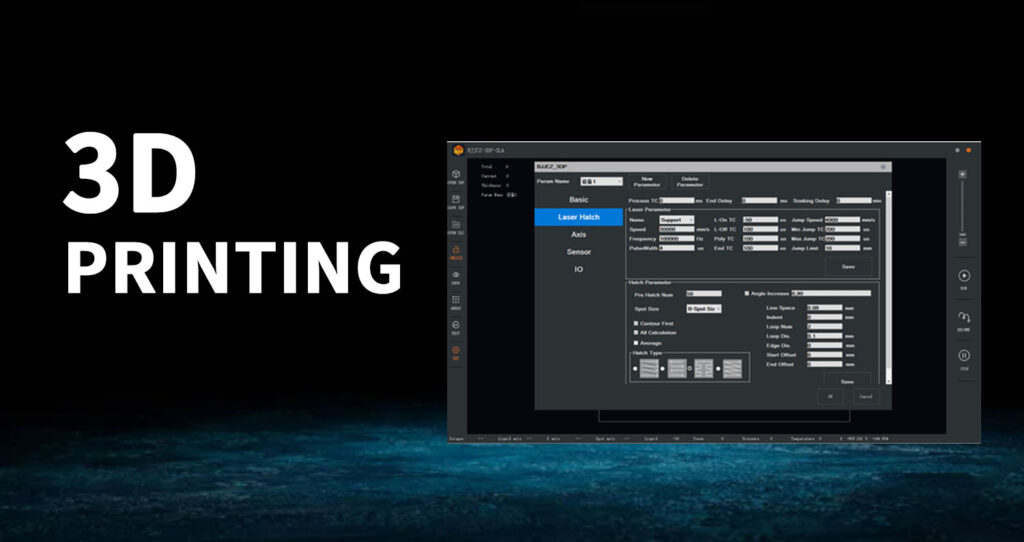

3D printing has rapidly evolved from a prototyping tool into a core manufacturing technology across industries such as aerospace, medical devices, automotive, and industrial tooling. With continuous advancements in materials and equipment, different 3D printing processes now serve very specific production needs.
Among the most widely used technologies today are 3D printer SLA, SLS 3D printer, and SLM printing. Each method offers unique advantages in terms of accuracy, material compatibility, and end-use performance.
Understanding SLA 3D Printing Technology
SLA (Stereolithography) is one of the earliest and most precise forms of 3D printing. A 3D printer SLA uses a UV laser to selectively cure liquid photopolymer resin layer by layer.
Key advantages of SLA 3D printing include:
Extremely high surface quality and fine details
Excellent dimensional accuracy
Ideal for complex geometries and small features
Because of its precision, SLA 3D printing is widely used for:
Product design verification
Medical and dental models
Jewelry molds and aesthetic prototypes
SLA is particularly suitable when visual quality and accuracy are more important than mechanical strength.
SLS 3D Printer: Strength and Design Freedom
An SLS 3D printer (Selective Laser Sintering) uses a high-power laser to fuse powdered materials—typically nylon—into solid parts without the need for support structures.
Why choose SLS 3D printing?
Strong and functional parts
No support structures required
Excellent design freedom and internal structures
SLS 3D printers are commonly used in:
Functional prototypes
Small-batch production
Complex mechanical components
Compared with SLA, SLS offers superior mechanical properties, making it suitable for real-world functional testing.
SLM Printing for Metal Additive Manufacturing
SLM printing (Selective Laser Melting) is a metal-based 3D printing technology that fully melts metal powder using a high-energy laser. Unlike SLS, SLM produces dense, high-strength metal parts.
Core benefits of SLM printing:
Near-100% material density
High mechanical strength
Complex metal geometries impossible with traditional machining
SLM printing is widely applied in:
Aerospace structural components
Medical implants
Industrial metal tooling
As metal additive manufacturing continues to grow, SLM printing is becoming a key production method for high-performance parts.
Choosing the Right 3D Printing Technology
When selecting a 3D printing solution, the decision depends on several factors:
Required material (resin, polymer, or metal)
Mechanical performance expectations
Surface finish and accuracy
Production volume and cost
A 3D printer SLA is ideal for high-detail models, an SLS 3D printer excels in functional polymer parts, while SLM printing is unmatched for high-strength metal components.
The Future of 3D Printing Technology
With ongoing improvements in laser systems, materials, and process control, 3D printing is moving beyond prototyping into full-scale industrial manufacturing. SLA, SLS, and SLM technologies will continue to play complementary roles, enabling manufacturers to innovate faster and produce more efficiently.
Companies investing in advanced 3D printing solutions today are positioning themselves for greater flexibility, reduced lead times, and enhanced product performance in the future.