
In the fulfillment centers where I’ve spent the better part of the last decade, you learn very quickly that \”smell proof\” is a relative term. I’ve walked into warehouses where thousands of units of botanical products were supposedly sealed tight, yet the air told a completely different story. Most brands treat odor control as an afterthought checkbox to tick off during the sourcing phase. But if you’re moving high-terpene products or volatile organics, a cheap plastic lid and a prayer won’t save your reputation or your bottom line.
True odor management is not about masking a scent; it’s about mastering molecular migration. When we talk about Smell Proof Jars, we are discussing a specialized engineering challenge that sits at the intersection of material science and mechanical sealing.
The Porosity Problem: Why Plastic is Your Enemy
The biggest mistake I see emerging brands make is opting for standard PET or HDPE plastics. To the naked eye, these materials look solid. Under a microscope, however, they are essentially a series of loosely woven chains. Over time, aromatic compounds perform what we call off gassing, they literally tunnel through the plastic walls.
If you are serious about long-term shelf stability, glass is the only non-negotiable substrate. Borosilicate or thick-walled ultraviolet glass provides an impermeable barrier that molecules simply cannot penetrate. In my opinion, any brand using plastic for high-potency aromatics is just counting down the days until their product loses its profile and the customer opens a muted, disappointing package.
The Engineering of the Seal
A jar is only as good as its weakest point, which is almost always the interface between the rim and the cap. In the fulfillment world, we look for torque retention. If a cap loosens during the vibrations of transit, the seal is compromised.
Professional-grade Smell Proof Jars utilize three specific components to ensure a vacuum-like environment:
- Thread Depth: Shallow threads are prone to stripping and back-off. Deep, continuous threading ensures the cap stays compressed against the liner.
- Liner Composition: This is the unsung hero. A simple foam liner will not cut it. You need PTFE (Teflon) or multi-layer induction seals that provide a chemical-resistant barrier.
- The Beveled Edge: High-end glass jars feature a precision-ground rim. This ensures that the pressure applied by the cap is distributed evenly across the gasket, leaving zero microscopic gaps for air exchange.
Real-World Stakes: Shipping and Compliance
From a logistics perspective, odor control is not just about discretion, it’s about preventing cross-contamination. I’ve seen entire shipments of apparel ruined because they were stored next to poorly packaged botanicals. The scent molecules migrated out of the sealed jars and bonded with the fabric of the neighboring SKU.
This is where working with an experienced partner like IBEX Packaging makes a difference. They understand that the secondary packaging (the box) is secondary to the primary vessels integrity. When the primary container fails, the entire supply chain feels the ripple effect, leading to rejected shipments and flagged carrier accounts.
3 Common Mistakes I See Every Season
Having audited hundreds of packaging workflows, these three errors crop up regardless of the brands size:
- Ignoring Temperature Fluctuations: Odor molecules move faster when warm. A jar that seems smell proof in a 68-degree office might fail miserably in a 95-degree delivery truck. Always test your packaging in torture chambers that mimic real-world shipping conditions.
- Over-tightening the Lids: It sounds counterintuitive, but cranking a lid down can actually deform the liner or crack the plastic threading, creating a permanent leak path.
- Neglecting Cleanliness During Fill: If your team gets even a trace amount of product on the outside of the jar or in the threads during the filling process, it does not matter how good your seal is. The jar will smell because the exterior is contaminated.
The Aesthetics of Secrecy
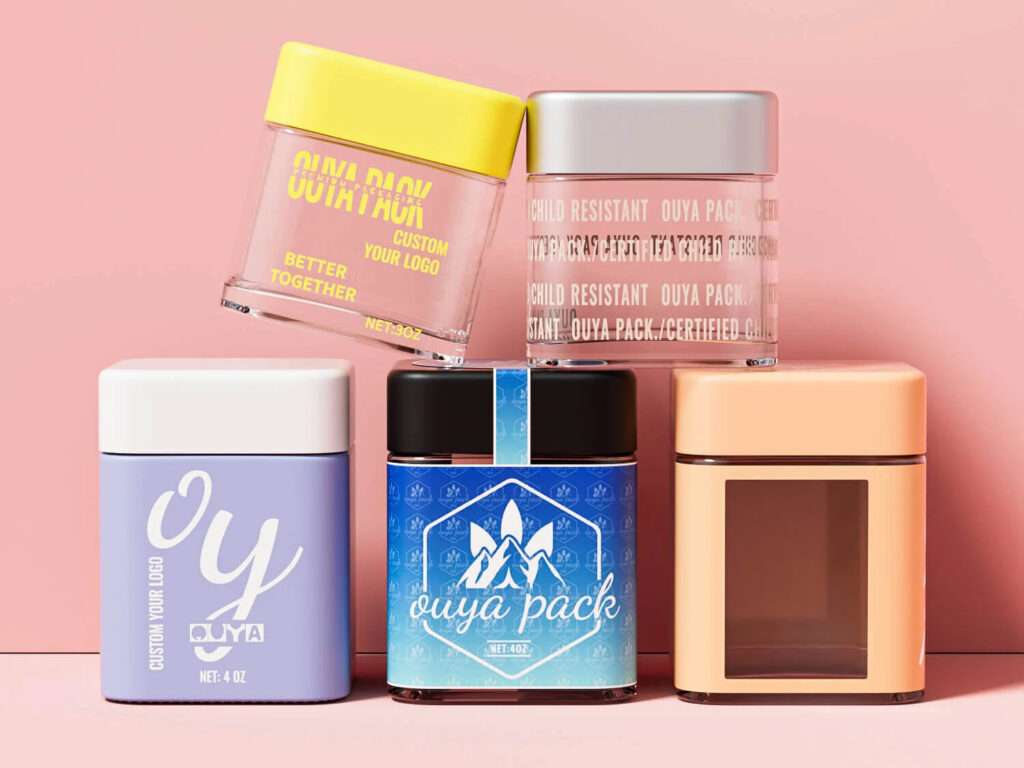
In today’s market, consumers do not want their Smell Proof Jars to look like something out of a laboratory. We are seeing a massive shift toward stealth luxury. This involves matte finishes, soft-touch coatings, and minimalist branding.
However, a word of caution: do not let aesthetics override function. I’ve seen beautiful jars with child-resistant mechanisms that are so poorly designed they actually prevent the lid from seating properly, defeating the entire purpose of odor control. Form must follow function, especially when you’re dealing with volatile compounds.
My Take: The Future is Ultraviolet
If you want my honest opinion, the industry is moving toward UV-blocking glass as the gold standard for Smell Proof Jars. Light degradation is the silent killer of product quality. When light hits your product, it breaks down the very compounds that create the aroma. By the time the consumer opens the jar, the smell is not there because the product has chemically changed.
True odor control means protecting the product from the outside world just as much as you protect the outside world from the product.
Conclusion
Choosing the right Smell Proof Jars is an investment in your brand’s longevity. Every time a customer opens a jar and is hit with that fresh, preserved aroma, you are building trust. Conversely, a leaky seal is a fast track to a one-and-done customer.
Do not cut corners on the glass weight or the liner quality. In the fulfillment business, we have a saying: Cheap packaging is the most expensive mistake you’ll ever make. Between returns, damaged reputations, and logistics headaches, the cost of a failed seal far outweighs the few cents saved on a lower-quality jar.