
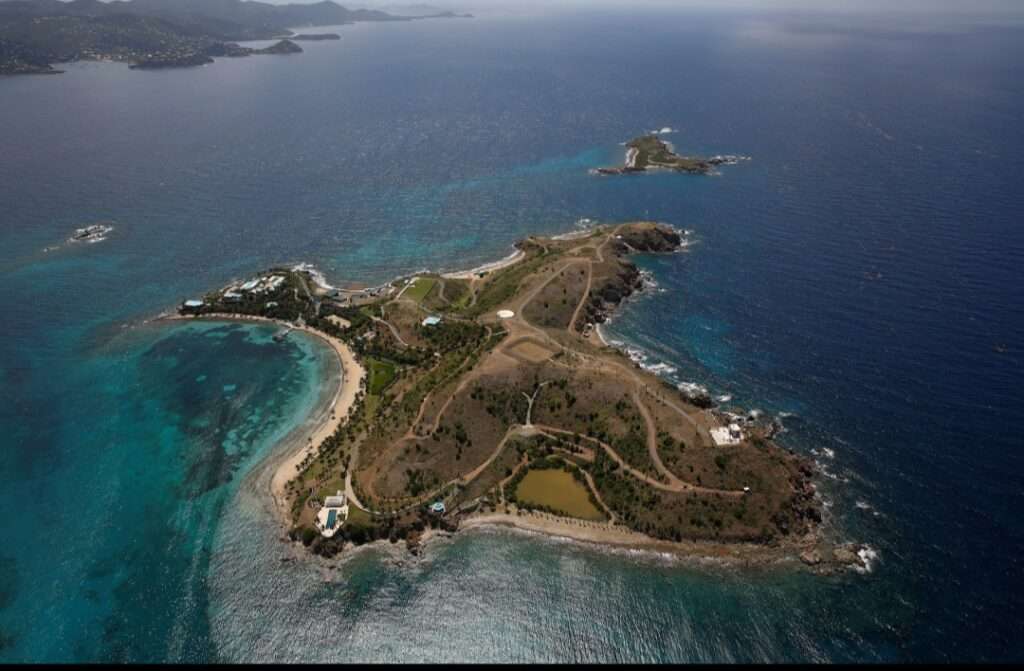

In the bright blue waters of the Caribbean sat a 70-acre private paradise known as Little St. James Island. It belonged to financier Jeffrey Epstein. From the outside, it looked like a luxury retreat—white villas, palm trees, yachts anchored offshore, and a distinctive striped temple-like structure overlooking the sea.
But behind the gates, something far darker was unfolding.
Epstein built his reputation in elite circles during the 1990s. He cultivated relationships with powerful figures, traveled in private jets, and hosted exclusive gatherings. In 1998, he purchased the island and turned it into a secluded compound. Over time, it became more than a vacation property. According to federal investigations and survivor testimony, it was used as a central location for the trafficking and sexual abuse of underage girls.
Young girls—some as young as fourteen—were allegedly recruited, groomed, and transported to Epstein’s properties in New York, Florida, and the U.S. Virgin Islands. Survivors later described being flown to the island, isolated from the outside world, and subjected to abuse.
He did not operate alone. Ghislaine Maxwell, a British socialite, was accused of recruiting and grooming many of the victims. Prosecutors said she helped normalize the environment, earning trust before exploitation began.
Epstein’s first major legal reckoning came in 2008. Despite evidence and multiple victims, he secured a controversial plea deal in Florida, pleading guilty to state charges and serving just 13 months in jail with work-release privileges. The agreement granted broad immunity and sparked public outrage years later.
In 2019, federal prosecutors in New York arrested him again on sex trafficking charges. For the first time, it appeared that meaningful accountability might follow. But on August 10, 2019, Epstein was found dead in his jail cell. His death was ruled a suicide, though it ignited global speculation.
The case continued without him. In 2021, Maxwell was convicted on multiple federal charges related to sex trafficking of minors and later sentenced to 20 years in prison. Civil lawsuits followed, leading to over $125 million in victim compensation through Epstein’s estate. The island itself was eventually sold, its proceeds directed toward settlements.
The revelations were not just disturbing—they were destabilizing.
There was shock at the scale of the abuse. Anger at how long it continued. Disbelief that warnings had surfaced years earlier but failed to trigger decisive action. For many observers, the most unsettling element was not only the crimes themselves but the apparent protection provided by wealth and influence.
Survivors described fear, confusion, and manipulation. Many said they struggled for years to be believed. Some were teenagers when the abuse began—approached in schools, malls, or parks, promised mentorship or opportunity, then drawn into exploitation.
Public reaction intensified as flight logs and court records revealed associations with powerful individuals. While association alone did not prove wrongdoing, the proximity of power to crime created a deep sense of institutional failure.
The case forced uncomfortable questions:
How could so many warning signs be ignored?
Why did the justice system initially respond so lightly?
How often does power silence accountability?
For survivors, the story was not about politics or conspiracy. It was about lost childhoods and lifelong trauma.
Epstein’s 2019 arrest marked a turning point. Investigative journalism reignited public scrutiny, and prosecutors revisited earlier failures. The 2008 plea deal became a symbol of systemic imbalance—how legal discretion, when influenced by status, can undermine justice.
Maxwell’s conviction signaled that enablers could be held accountable. Civil settlements acknowledged harm, even if they could never undo it. Financial institutions and organizations faced renewed scrutiny over compliance failures and ignored red flags.
More broadly, the case reshaped conversations about sex trafficking and survivor advocacy. It reinforced several lessons:
Believe survivors early. Delayed accountability compounds harm.
Scrutinize plea agreements. Transparency matters.
Follow financial trails. Exploitation often leaves monetary evidence.
Hold networks accountable. Trafficking rarely operates in isolation.
Ensure equal justice. Wealth must not distort prosecution.
Little St. James Island remains a symbol—no longer just a location, but a reminder. It represents how secrecy and privilege can conceal abuse, and how persistent voices can eventually force exposure.
The full truth of what occurred there may never be completely known. But the survivors’ testimonies ensured that silence would not prevail.
In the end, the story of Epstein Island is not only about crime. It is about power tested by truth—and the ongoing demand that no individual, regardless of influence, stands above the law.
for more click here