
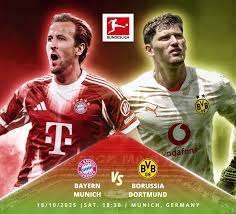

The rivalry between Bayern Munich and Borussia Dortmund (BVB) stands as the defining contest of modern German football. Known as Der Klassiker, this matchup represents more than a clash between two successful clubs; it is a battle of contrasting philosophies, regional pride, and footballing identities that have shaped the Bundesliga for decades.
Origins of the Rivalry
Unlike many traditional rivalries rooted in geography or politics, the Bayern–Dortmund rivalry emerged primarily from competition and success. Bayern Munich, founded in 1900, established themselves as Germany’s most dominant and globally recognized football club. With a rich history of domestic and European triumphs, Bayern became the benchmark for excellence in German football.
Borussia Dortmund, founded in 1909 in the industrial Ruhr region, rose to prominence in the 1990s under Ottmar Hitzfeld. Dortmund’s Bundesliga titles and their 1997 UEFA Champions League victory elevated them to Bayern’s primary challenger. From that moment onward, matches between the two clubs became decisive in determining German football’s direction.
Contrasting Club Identities
Bayern Munich symbolize power, consistency, and elite success. Their philosophy revolves around winning titles every season, attracting world-class players, and maintaining dominance both domestically and in Europe. Bayern’s culture of excellence is often described as “Mia san Miaâ€â€”a phrase representing confidence, pride, and an unyielding belief in superiority.
Borussia Dortmund, on the other hand, embody passion, youth development, and emotional connection with fans. Known for their electrifying Yellow Wall at Signal Iduna Park, Dortmund have built a reputation for nurturing young talents and playing fast, attacking football. BVB are seen as the people’s club—energetic, expressive, and driven by belief rather than financial might.
Tactical Battles and Playing Styles
The on-field contrast between the two sides adds intensity to Der Klassiker. Bayern Munich typically dominate possession, rely on technical superiority, and exploit individual brilliance. Over the years, legends such as Franz Beckenbauer, Karl-Heinz Rummenigge, Philipp Lahm, Arjen Robben, and Robert Lewandowski have defined Bayern’s approach.
Dortmund’s style emphasizes high pressing, quick transitions, and attacking freedom. Under managers like Jürgen Klopp, Dortmund perfected a high-intensity pressing game that challenged Bayern’s control and reshaped modern football in Germany. These tactical duels often produce fast-paced, goal-filled encounters.
Iconic Matches and Defining Moments
Der Klassiker has delivered unforgettable moments. Dortmund’s back-to-back Bundesliga titles in 2011 and 2012, including a historic 5–2 victory in the DFB-Pokal final, marked a golden era for BVB and disrupted Bayern’s dominance.
The rivalry reached its peak on the European stage in the 2013 UEFA Champions League final at Wembley, where Bayern defeated Dortmund 2–1 in an all-German final. Arjen Robben’s late winner symbolized Bayern’s resilience and cemented the rivalry’s global stature.
Fan Culture and Emotional Weight
The emotional intensity of Bayern vs Dortmund is unmatched in German football. Bayern’s fans represent tradition, expectation, and global ambition, while Dortmund’s supporters are renowned for their loyalty, atmosphere, and emotional investment. Matches between the two clubs often feel like a battle between control and chaos, power and passion.
A Rivalry That Defines the Bundesliga
In recent years, Bayern’s sustained dominance has tilted the balance, but Dortmund remain the league’s most credible challenger. Every meeting carries title implications, pride, and the hope of reshaping German football’s hierarchy.
Conclusion
Bayern Munich vs Borussia Dortmund is more than just a football match—it is the heartbeat of the Bundesliga. It represents ambition versus belief, dominance versus defiance, and tradition versus transformation. As long as these two giants compete, Der Klassiker will continue to captivate fans and define the story of German football.